
Jasmine Rice


.svg)
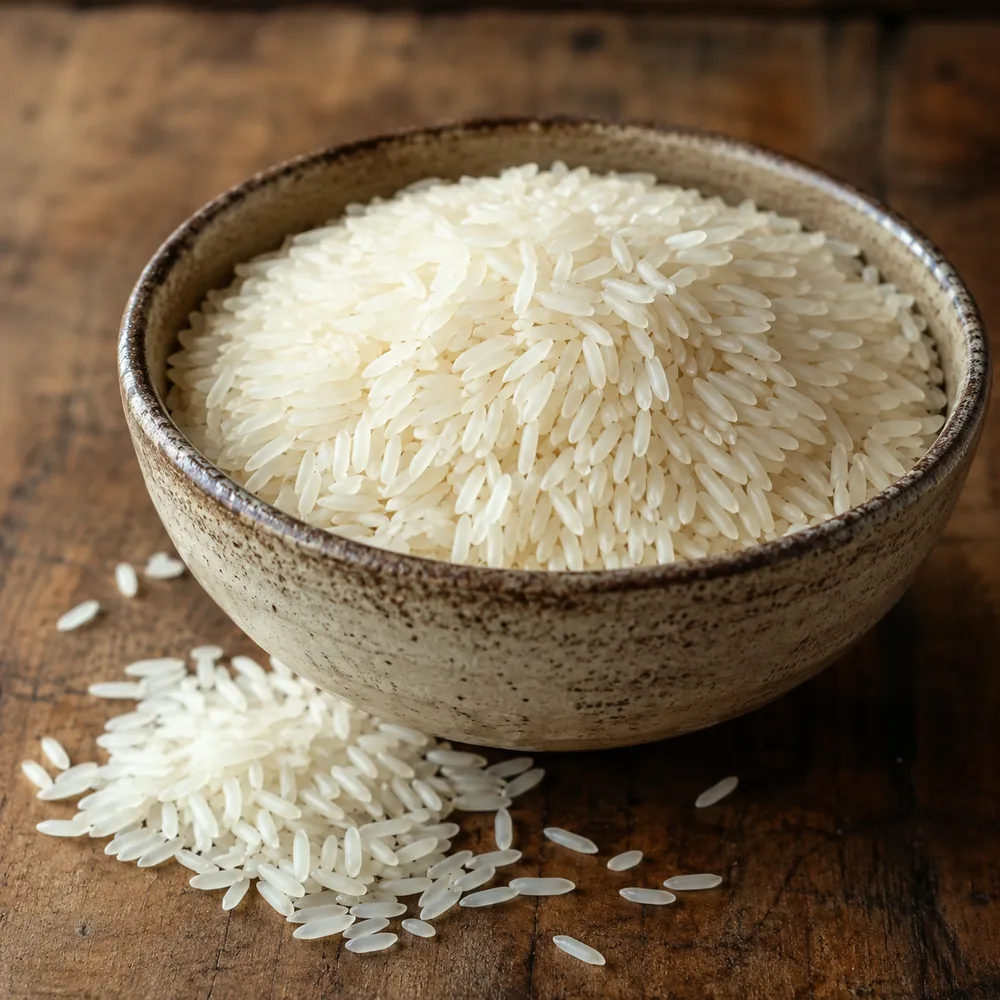
Jasmine rice is the everyday long-grain rice of Thailand, and the default rice for most Thai, Lao and Cambodian meals. Cooked grains are soft, a little clingy and slightly sticky compared with basmati, which makes them easy to eat with a spoon and good at carrying curry and stir-fry sauces. The name comes from the aroma rather than the flower: fresh jasmine rice smells faintly of pandan and popcorn.
Newer harvests hold more moisture and need less water, so start with roughly one and a quarter parts water to one part rice and adjust to your bag. Rinse two or three times until the water runs almost clear, then rest the cooked rice off the heat for ten minutes before fluffing.
Ingredients
Nothing but rice. White jasmine has been milled to remove the husk, bran and germ; brown jasmine keeps the bran, which adds a nutty flavour and needs more water and about twice the cooking time. Buy in quantities you will use within a year, since the aroma fades as the rice ages.
Nutritional Facts
Uncooked white jasmine rice contains about 356 calories, 0.7 grams of fat, 79 grams of carbohydrates and 7 grams of protein per 100 grams, which works out to roughly 130 calories per 100 grams once cooked. It is naturally gluten free and low in fat, and has a relatively high glycaemic index. Brown jasmine offers more fibre, magnesium and B vitamins.
Recipes using this ingredient




Other glossary terms
Sign up for future updates
Get recipes, special offers and other content straight to your inbox.