
Mung Bean Glass Noodles (Woon Sen)


.svg)
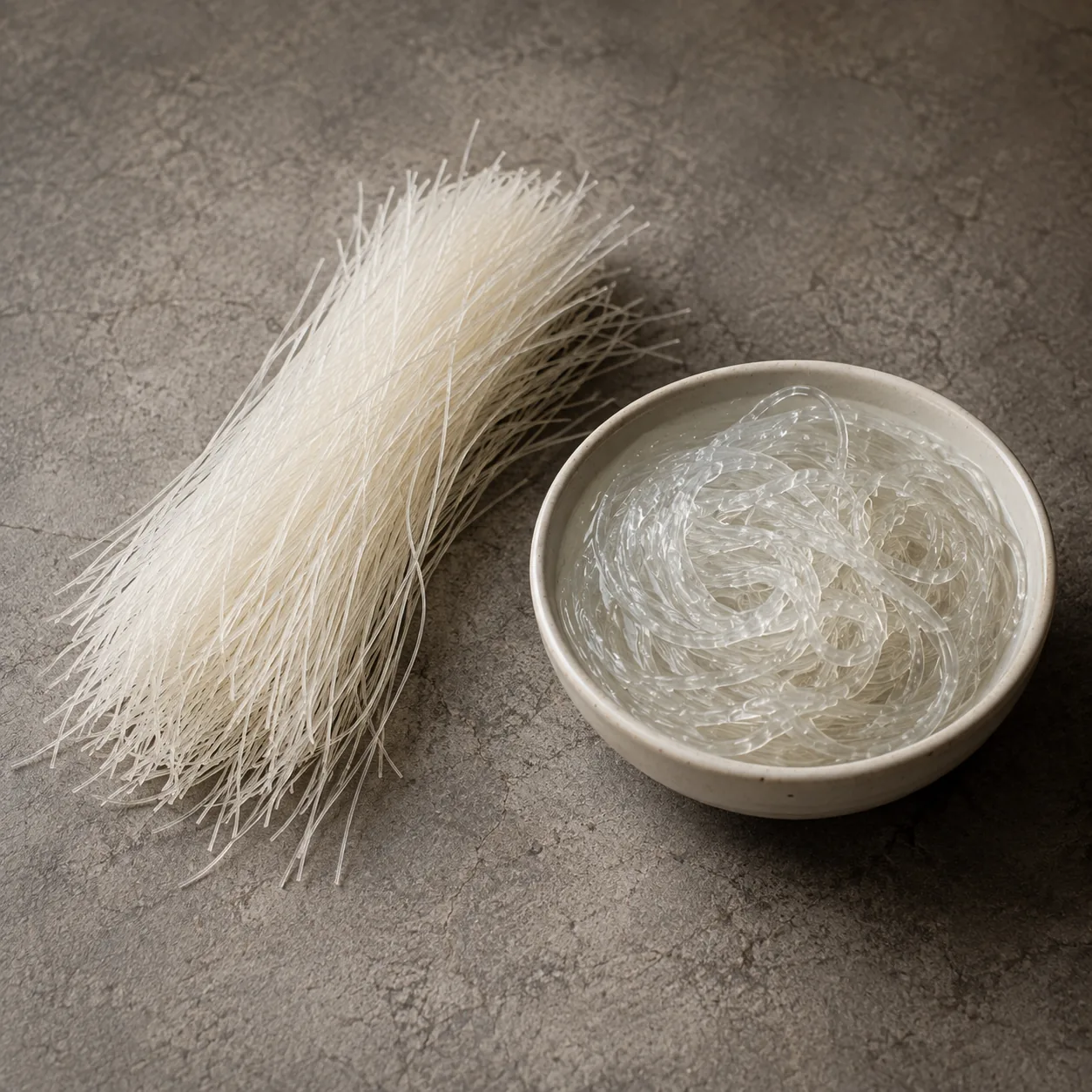
Mung bean glass noodles are sold dry in tight little bundles, hard and opaque white, and transform completely once they hit warm water – turning glassy, springy and almost transparent. In Thailand they are woon sen, in Vietnam they are bun tau or mien, and in China they are fensi.
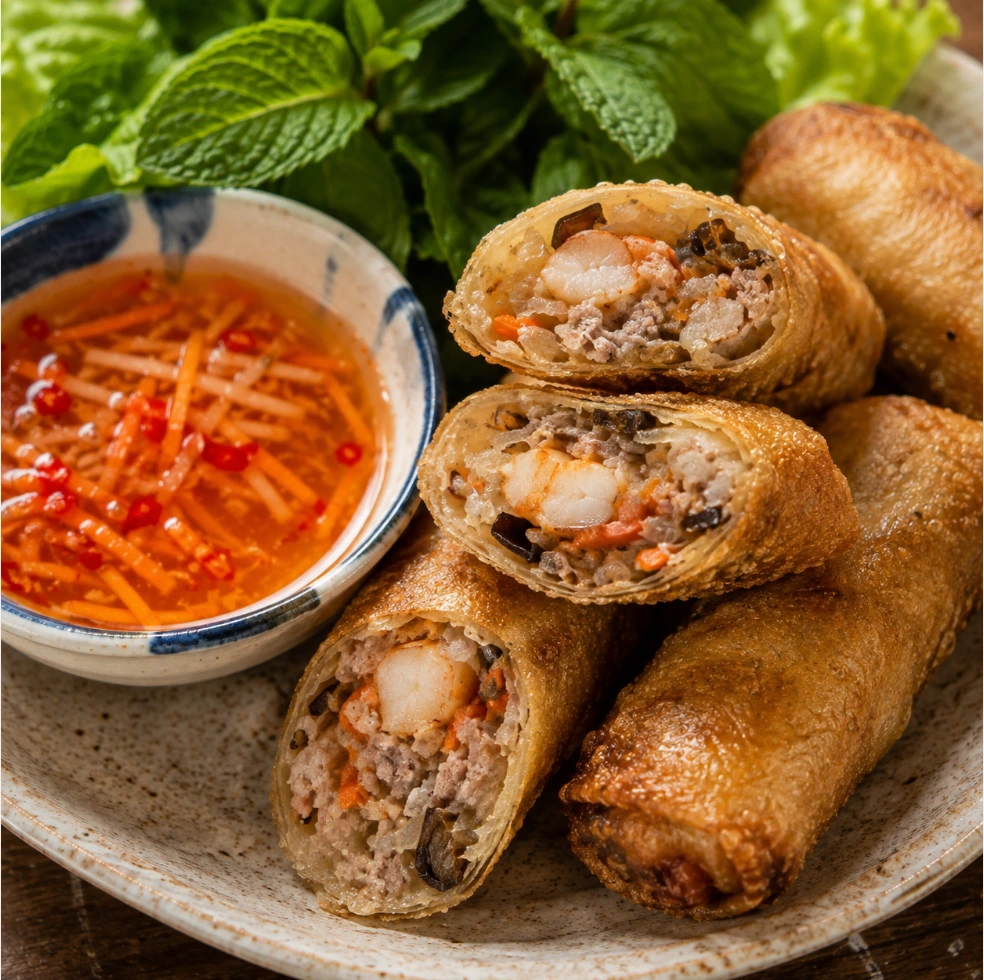
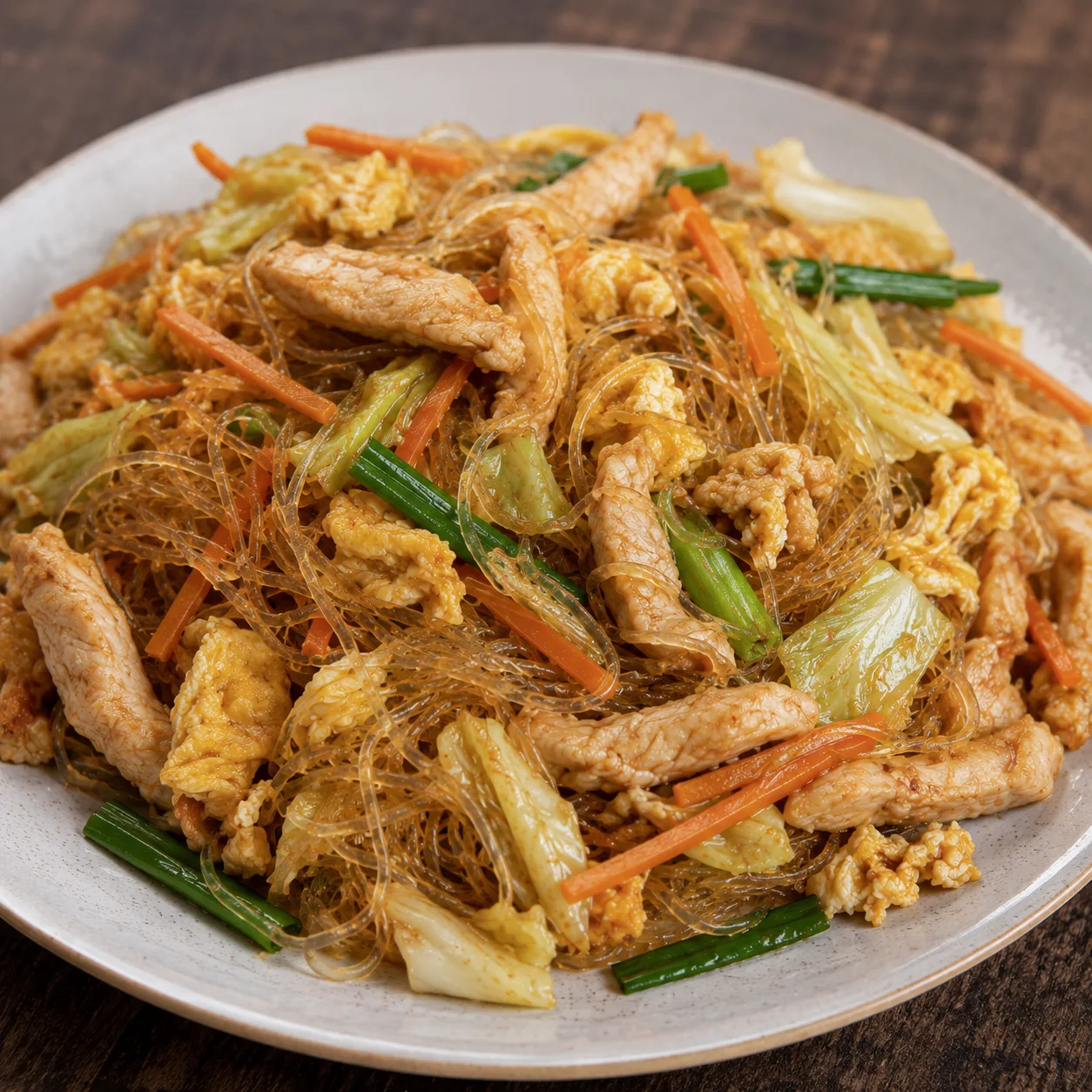
Because they are pure starch they carry almost no flavour of their own, which is exactly the point. They act as a sponge for whatever they are cooked in, which is why they work so well in Thai glass noodle salads dressed with lime and fish sauce, in stir fries such as pad woon sen, and packed into the filling of Vietnamese fried spring rolls.
They need very little cooking. A 10 to 15 minute soak in warm water is usually enough before they go into a stir fry or a salad; boiling them tends to turn them to mush. For spring roll fillings, soak and then chop them so they do not pull out of the roll in long strands.
They are not the same as Korean dangmyeon, which are made from sweet potato starch, noticeably thicker, chewier and grey-brown when raw. If a Korean recipe such as japchae calls for glass noodles, reach for dangmyeon instead.
Recipes using this ingredient
Other glossary terms
Sign up for future updates
Get recipes, special offers and other content straight to your inbox.