Chinkiang black vinegar: the dumpling dip worth knowing
Meet Chinkiang black vinegar: what it tastes like, how to choose it, how to use it for dumplings and noodles, plus substitutes and storage advice.
Is black vinegar the same as soy sauce?
No. Their colours can look similar, but black vinegar supplies acidity and soy sauce supplies salty, savoury seasoning.
Is Chinkiang vinegar gluten-free?
Don't assume so. Wheat bran can be used, so check the exact product.
Can I use it straight as a dumpling dip?
Yes. Start with a small amount and add water or other seasonings to suit your taste.
Is it the same as balsamic vinegar?
No. Balsamic is a different vinegar with a grape-based character. It can approximate part of the flavour balance in some dishes, but won't reproduce Chinkiang vinegar.
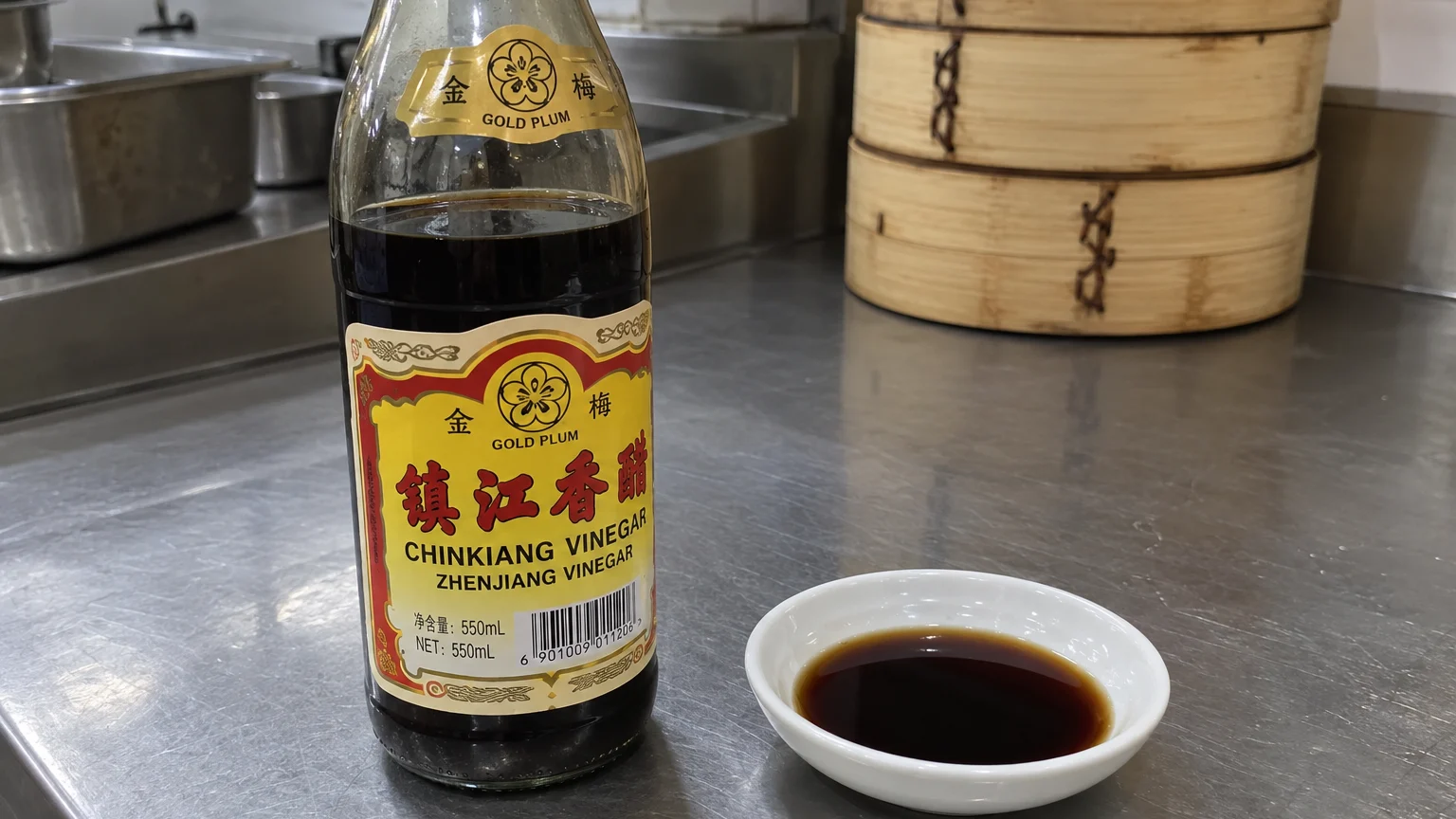
Chinkiang black vinegar is a Chinese vinegar associated with Zhenjiang in Jiangsu province. It is commonly made using glutinous rice, sometimes with other grains, and has a dark colour and tangy, malty flavour. Use it in dumpling dips, noodle dressings, braises and sauces when you want acidity with more depth than a pale vinegar. (The Woks of Life’s black vinegar guide)
If you have ever enjoyed the dark, tangy vinegar beside a plate of dumplings, this is a bottle to investigate. It does a particular job very well: making rich, savoury food feel lively without relying on more salt or chilli.
Chinkiang or Zhenjiang: are they the same?
Chinkiang is an older English rendering of Zhenjiang. You will see both names on products and in recipes. The Chinese name 镇江香醋 is another useful clue when comparing bottles.
There is a long regional tradition behind this vinegar. China's intellectual-property authority describes Zhenjiang vinegar as a glutinous-rice-based product connected with the city and surrounding area. That regional identity is more informative than simply calling every dark vinegar the same thing. (CNIPA’s Zhenjiang vinegar profile)
“Chinese black vinegar” is a broader shopping description. If your recipe specifically asks for Chinkiang, begin with that style rather than assuming a Shanxi aged vinegar or Japanese black vinegar will give an identical result.
What does black vinegar taste like?
Expect sourness with a malty, rounded character and sometimes a lightly sweet or smoky impression. It should still register as vinegar. It isn't soy sauce, and it isn't a ready-made sweet dipping sauce.
The quickest introduction is with food. Put a few drops on a plain cooked dumpling or a piece of cucumber. Then try it with a little light soy. You will learn more about your preferred balance than by judging it straight from a teaspoon.
Its dark colour can be deceptive: a sauce can look richly seasoned while still needing salt, or look like soy sauce while tasting distinctly sour. Measure the bottle you mean to use before the pan gets busy.
What is Chinkiang vinegar made from?
Glutinous rice is common, but other grain ingredients can appear. “Glutinous” describes sticky rice and does not itself mean gluten. The full formula is what matters.
For example, distributor NG Chee Lee lists HengShun Chinkiang Vinegar as containing water, glutinous rice, wheat bran, sugar and salt. That is a good reminder not to assume a product called rice vinegar is automatically wheat-free. (HengShun ingredient listing)
Sugar in an ingredient list doesn't by itself tell you the bottle is a thick sweetened dipping glaze. Judge the named product and its intended use, and taste it in food.
How to choose a bottle in Australia
Look first for “Chinkiang” or “Zhenjiang” on the label. Asian grocers and specialist online food shops are sensible places to compare the style when your local supermarket has only pale rice vinegar.
Choose a straightforward cooking vinegar for your first bottle. Aged versions can be interesting, but a premium age statement isn't necessary to make a good dumpling dip. Learn a regular product before paying more for differences you haven't yet tasted.
Read the ingredients, allergen information and storage directions. If gluten-free suitability is important, choose a specifically suitable product instead of relying on rice being the headline grain. Check any seasoned or flavoured version separately.
Buy a size that suits your habits. If you cook dumplings or noodles most weeks, a standard bottle may be practical. If you are trying it for the first time, the smallest convenient size lowers the cost of finding out what you like. Compare value per 100 mL, and include delivery costs when shopping online.
Finally, keep the bottle clearly distinguished from soy sauce at home. The wrong splash is very noticeable.
Ways to use Chinkiang black vinegar
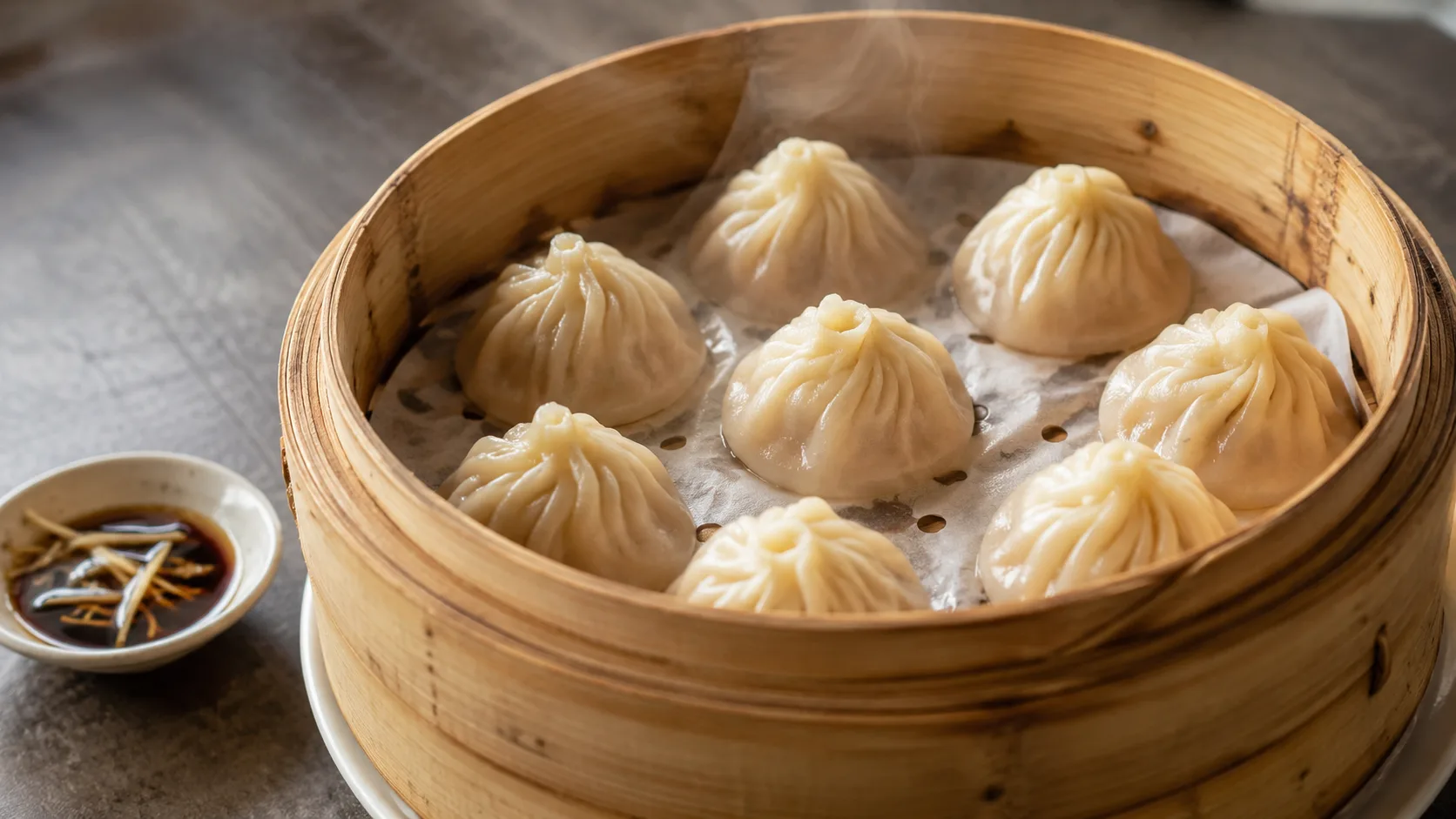
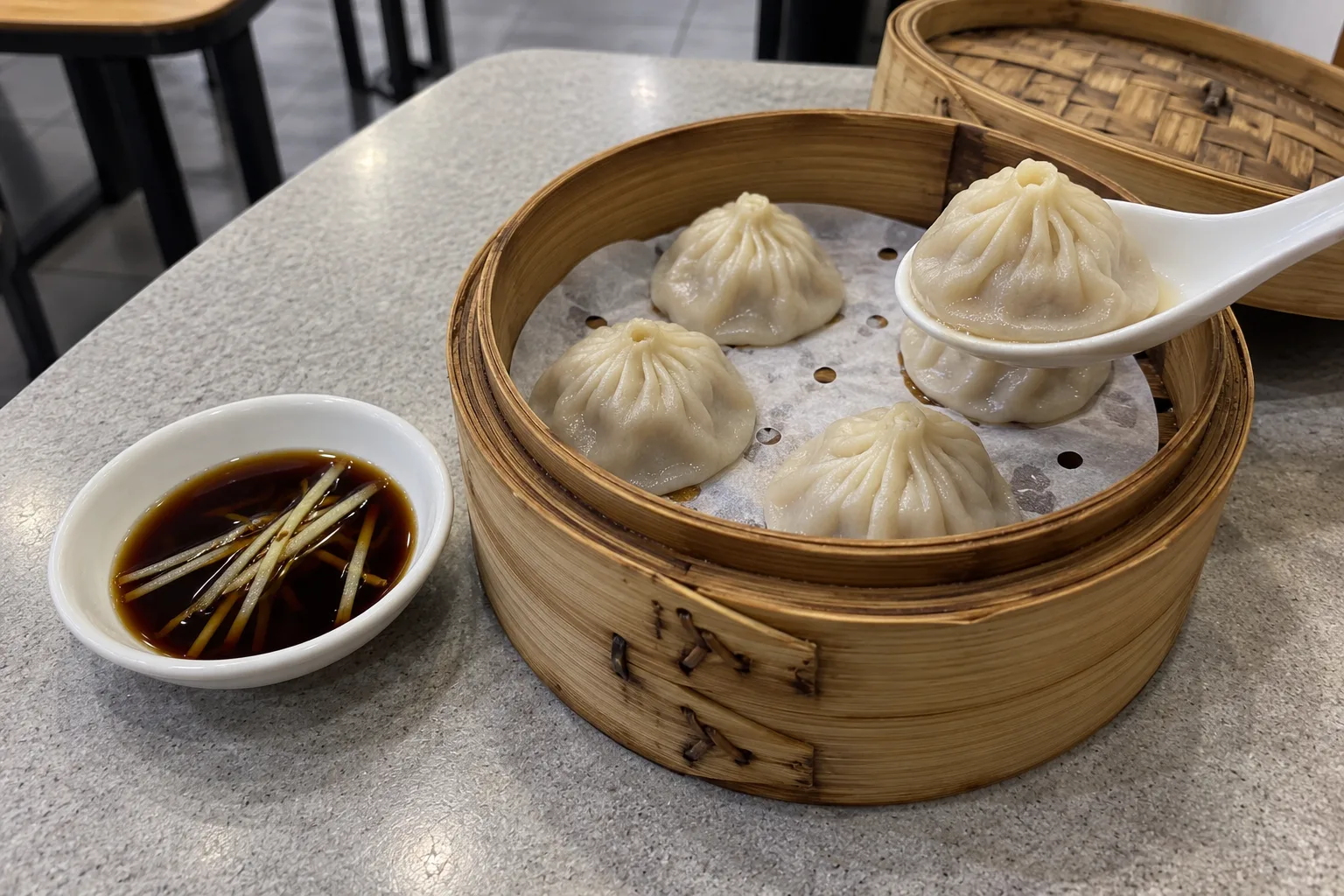
With dumplings: start with 2 teaspoons black vinegar and 1 teaspoon water. Add finely sliced ginger if you like. Taste with a cooked dumpling, then add a little light soy only if you want more salty seasoning. There is no need to turn every dip into a complicated sauce.
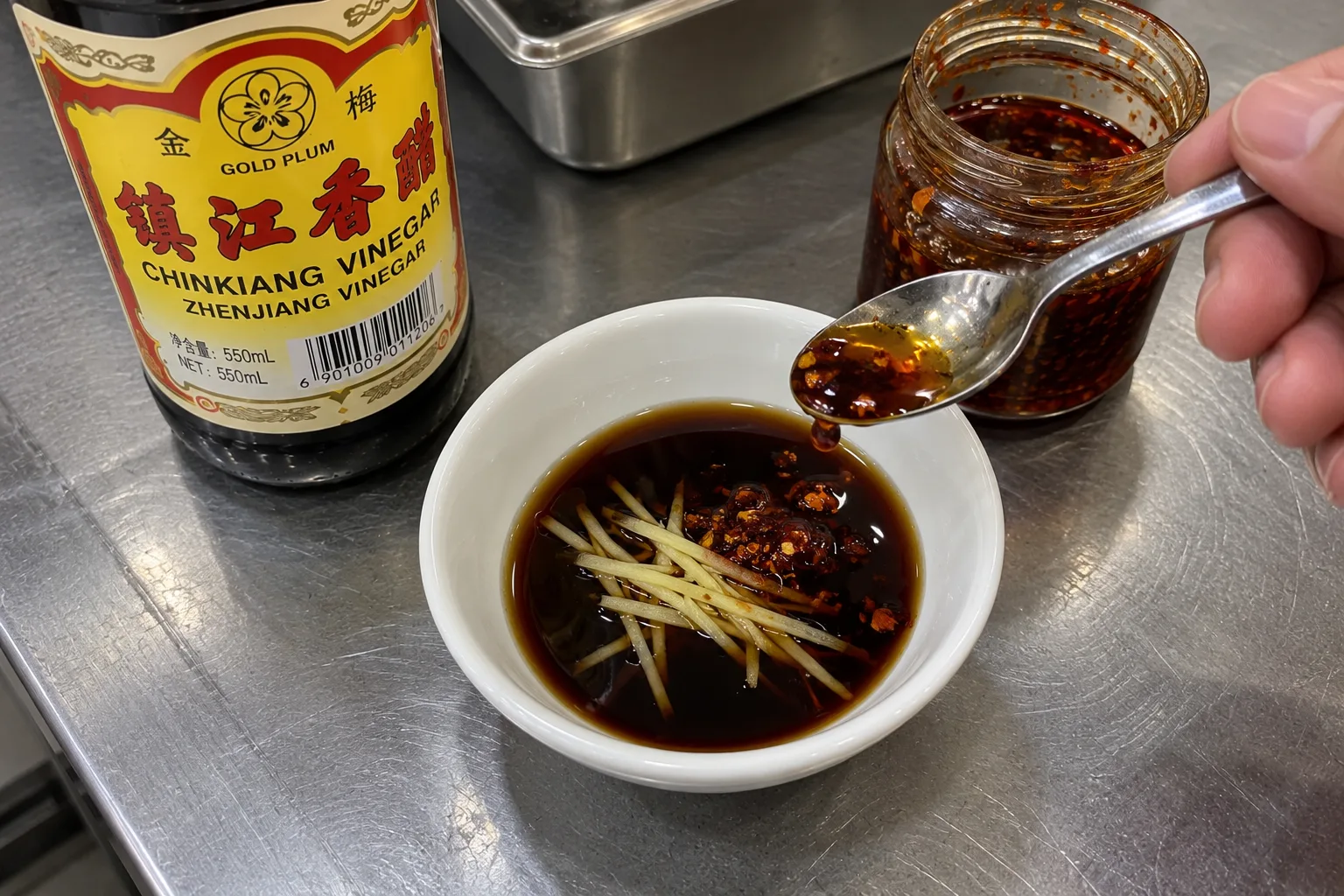
With noodles: mix black vinegar into a dressing with light soy, water and your preferred chilli condiment. Dress a small portion first. This lets you adjust the sourness without committing the entire bowl.
With vegetables: try a small amount in a cucumber or cooked mushroom dressing. Taste before adding sesame oil; the vinegar's character should remain easy to recognise.
In a braise or cooking sauce: add the quantity your recipe requests. Vinegar cooked into a sauce behaves differently from a fresh splash at the table. If you want extra brightness at the end, test a few drops on a spoonful before seasoning the whole pot.
Black vinegar can accompany fatty or richly flavoured food particularly well. It doesn't physically remove the fat; it changes the balance you taste. Start small enough that it remains a useful contrast rather than the only flavour in dinner.
What can you substitute for black vinegar?
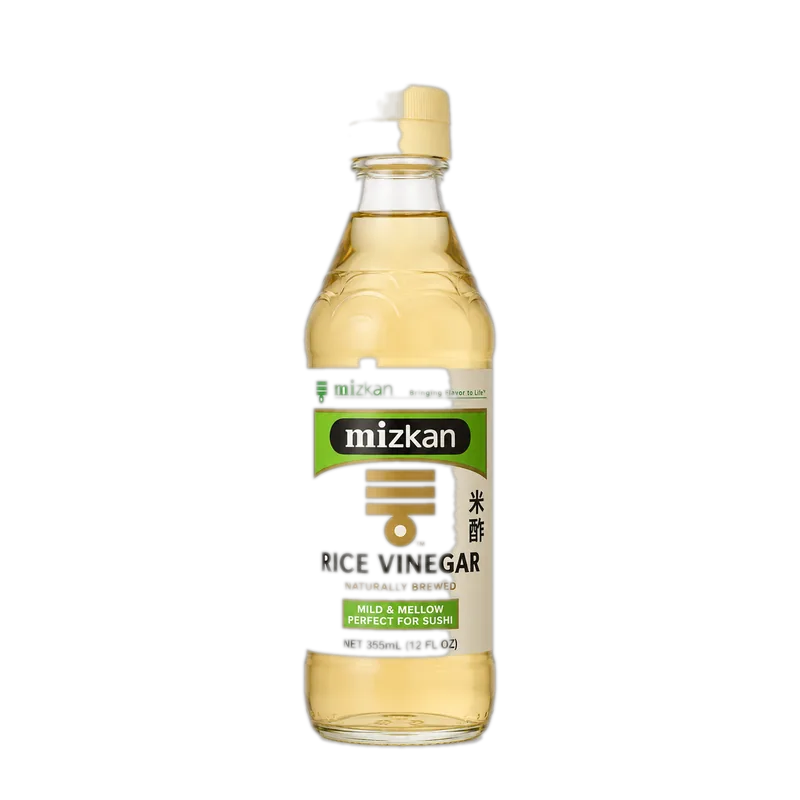
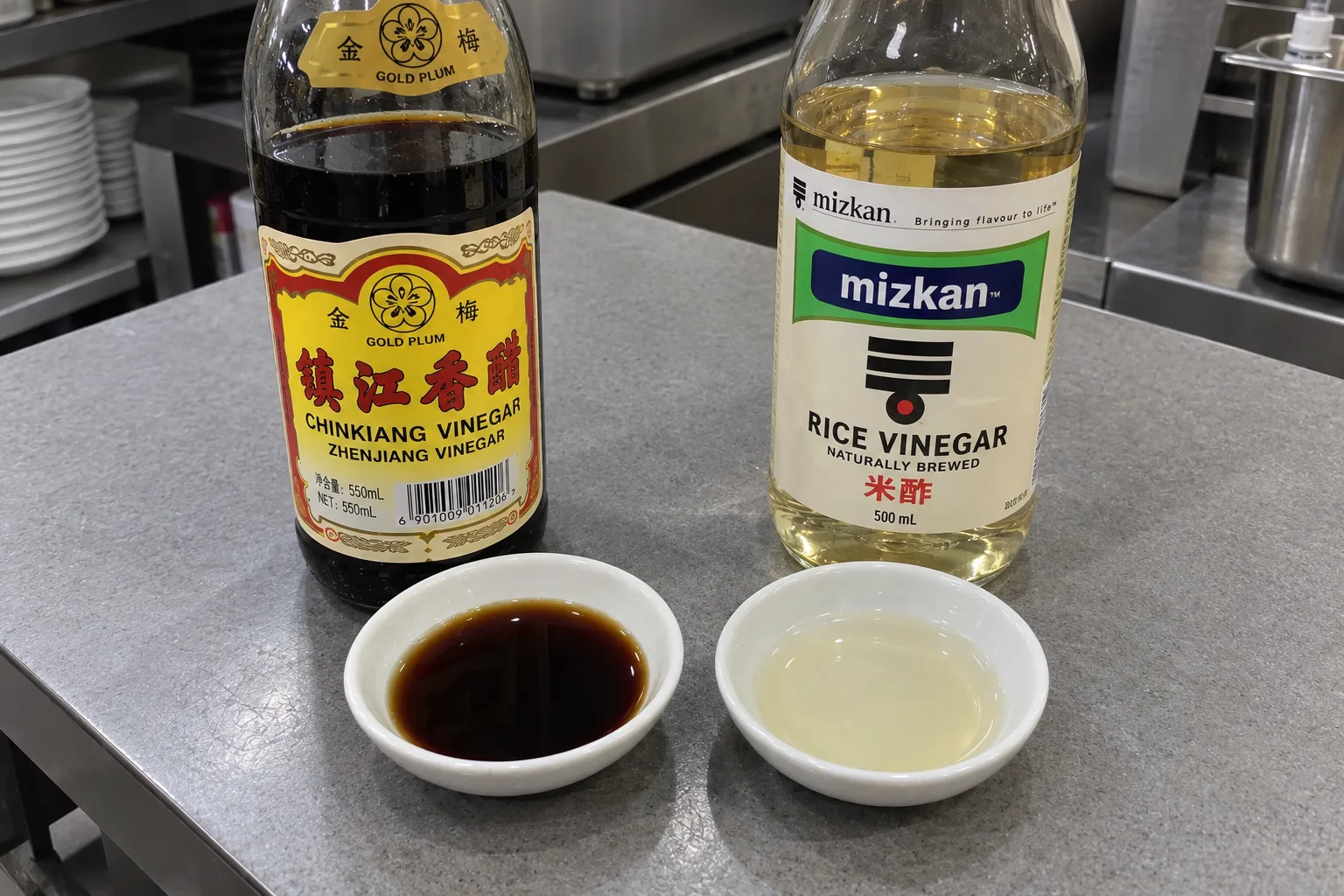
For a little acidity in an everyday sauce, pale rice vinegar can keep dinner moving. You will lose the dark colour and malty character. Start with less and adjust rather than assuming identical strength.
A modest amount of balsamic can be an approximation in some robust dishes, but its grape flavour and sweetness are different. Avoid a thick balsamic glaze: it introduces an even larger change in texture and sugar. A simple vinegar you already like may be a better choice if acidity is the only job you need replaced.
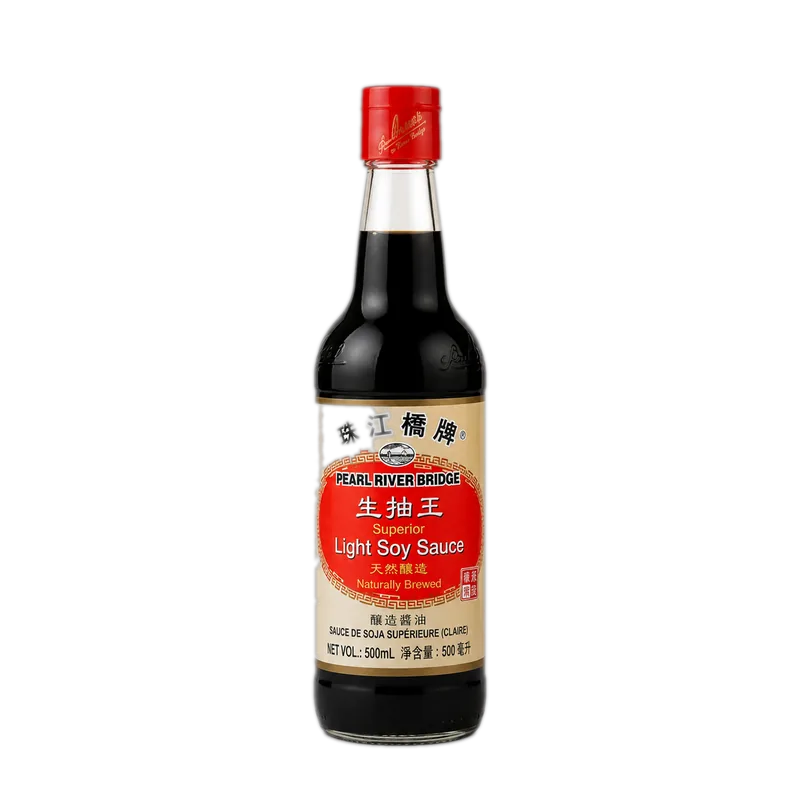
Soy sauce is not a black vinegar substitute. It adds salt and savouriness rather than the same sourness. If the vinegar is the central flavour of a dumpling dip, buying the right bottle is more worthwhile than building an elaborate imitation.
Storage
Keep the vinegar tightly capped in a cool, dark place and follow its own instructions after opening. Some manufacturers may specify refrigeration. Use a clean utensil, and don't pour a used dipping mixture back into the bottle. A dip with fresh ginger or garlic has different storage needs from the vinegar alone.
Sources and further reading
The linked references support the regional identity, flavour and uses, and a specific ingredient example. Black vinegar labels cover several styles; product-specific details should come from the bottle being sold.