Toasted sesame oil: small bottle, big flavour
Choose the right sesame oil for noodles, stir-fries and dressings. Learn toasted versus untoasted, cooking tips, substitutes and how to store your bottle.

Is pure sesame oil always toasted?
No. “Pure” doesn't tell you whether the seeds were roasted. Check the description.
Does sesame oil need refrigeration?
That depends on the product's instructions. Some manufacturers recommend a cool, dark cupboard. Follow the pack rather than a blanket rule.
Can I fry everything in toasted sesame oil?
For everyday stir-fries, a neutral cooking oil plus a small finishing amount of toasted sesame oil is a more controllable starting point.
Is sesame oil gluten-free?
Plain sesame oil doesn't require a gluten-containing ingredient, but check blends, flavourings and the current label when gluten-free suitability matters.
Toasted sesame oil is an aromatic oil made from roasted sesame seeds. It adds a nutty, toasted flavour to noodles, dressings, marinades and finished dishes. It is different from pale, untoasted sesame oil, which has a milder flavour. For a starter pantry focused on Chinese, Korean and Japanese-style home cooking, toasted sesame oil is the useful first choice. (Just One Cookbook’s sesame oil guide)
This is a seasoning you measure in small amounts. A few drops can make a bowl of noodles smell inviting; an enthusiastic glug can make everything else disappear. Once you understand that, the little bottle starts making a lot of sense.
Toasted, untoasted, pure or blended?
“Toasted” and “roasted” describe the treatment of the seeds. “Pure” describes the oil's composition, rather than promising a particular roast. Read both the product description and ingredients.
| Type | Flavour | Best reason to buy it |
|---|---|---|
| Toasted or roasted sesame oil | Strong, nutty and fragrant | Finishing, dressings and seasoning sauces |
| Untoasted sesame oil | Milder sesame flavour | Recipes that specifically need a mild sesame cooking oil |
| Blended sesame oil | Depends on the proportion and roast | A different intensity or price point, if clearly labelled |
| Chilli sesame oil | Sesame plus chilli heat | A deliberate spicy seasoning |
Roast intensity also varies. Some sesame oils are lighter and gentler; others are dark and robust. Don't assume two brown bottles will taste equally strong. (The Woks of Life’s sesame oil comparison)
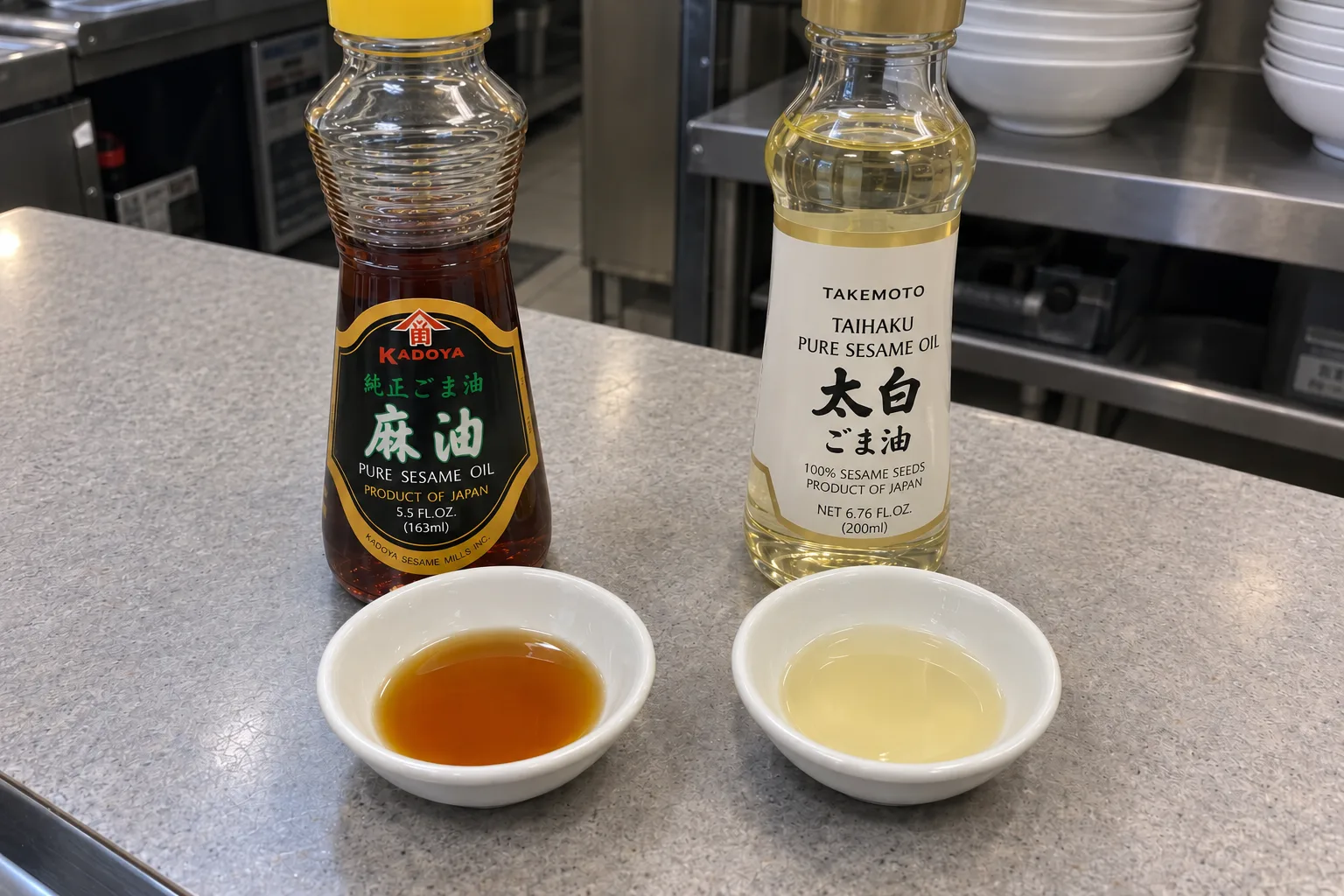
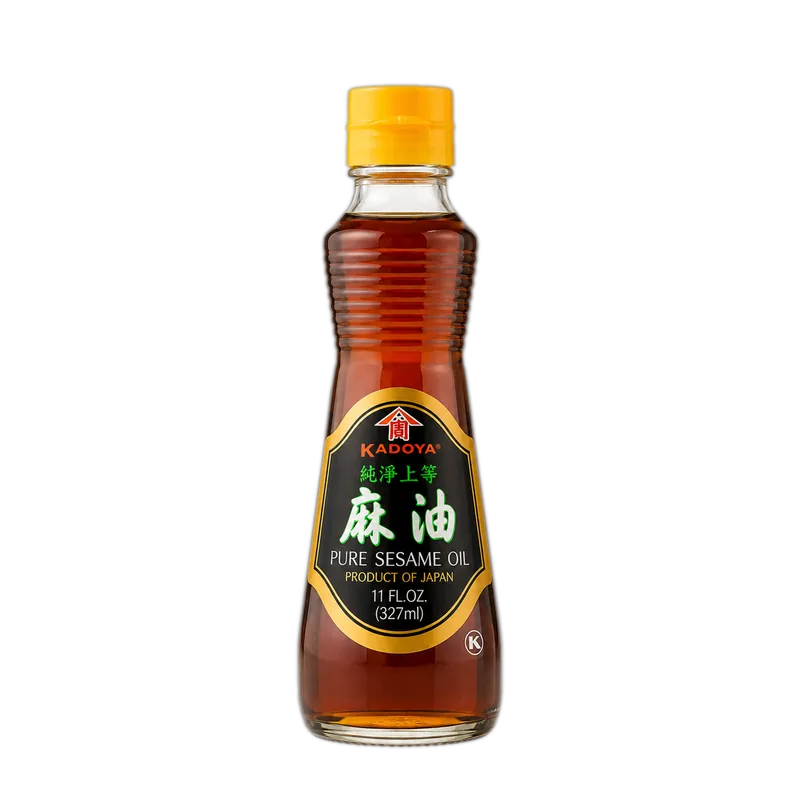
Kadoya's range includes both roasted sesame oils and a non-roasted option, illustrating that even one producer can offer oils intended for different results. (Kadoya’s sesame oil styles)
How to choose sesame oil in Australia
Start with a bottle described as toasted or roasted. If the label only says sesame oil, look for a description of the flavour or production; colour is a clue, but not enough on its own.
Next, check whether sesame is the only oil or whether it is blended with another oil. A blend isn't automatically a poor purchase, but it may not deliver the same intensity per teaspoon. When you are learning recipes, a clearly identified product makes the results easier to repeat.
Choose a small bottle you can finish while the aroma is still lively. Compare prices per 100 mL, then consider how often you cook with it. Buying a large tin to save a little per spoonful only works if you have a realistic plan to use it.
Look for a secure cap and a pour you can control. Keep the bottle away from the hot pan while measuring, and wipe the neck before putting it away. A sticky, oily bottle tends to invite bigger, less accurate pours.
Sesame oil contains sesame. For dietary requirements, check the full label rather than inferring suitability from the product name. Added seasonings or blends can introduce other ingredients. If you need to avoid sesame, an untoasted sesame oil is not an alternative.
Can you cook with toasted sesame oil?
Yes, it can appear in cooked dishes. The helpful distinction is how you use it. For an everyday hot stir-fry, use a suitable neutral oil to cook the main ingredients and add a small amount of toasted sesame oil towards the end. You get more control over its aroma that way.
It isn't necessary to treat every drop of toasted sesame oil as too delicate to warm. Some recipes deliberately cook with it at moderate heat. Follow the recipe rather than turning a finishing tip into a blanket ban. (Just One Cookbook’s cooking guidance)
For a first experiment, put plain cooked noodles in a bowl with your usual sauce. Add just a few drops of toasted sesame oil, toss and taste. Repeat until you can identify its aroma without losing the other flavours. That gives you a better reference than pouring it straight into a full pan.
Easy ways to use a bottle
Finish a soup. Add a few drops to an individual bowl after serving, then taste. It is easier to adjust one bowl than undo a whole pot.
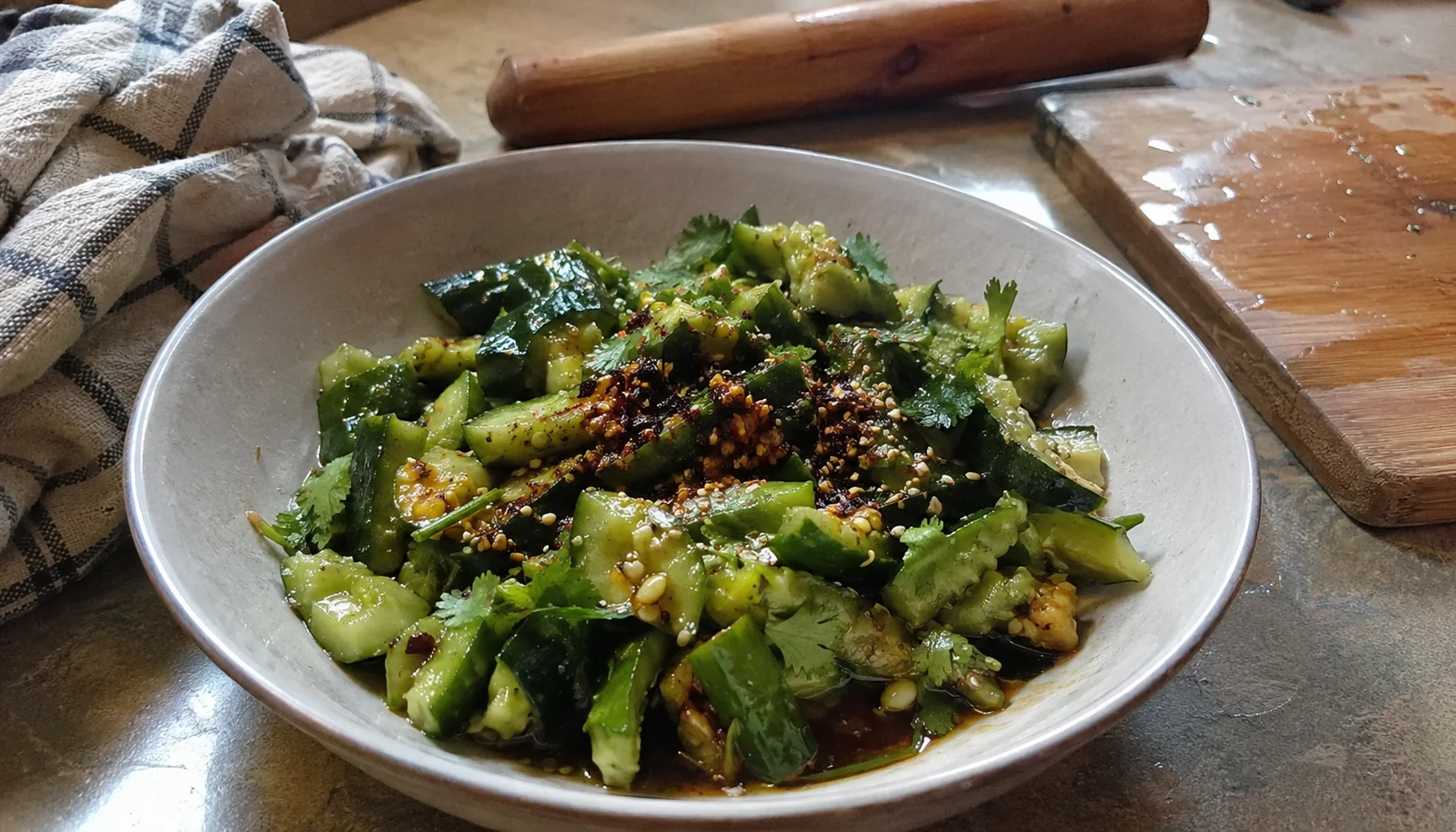
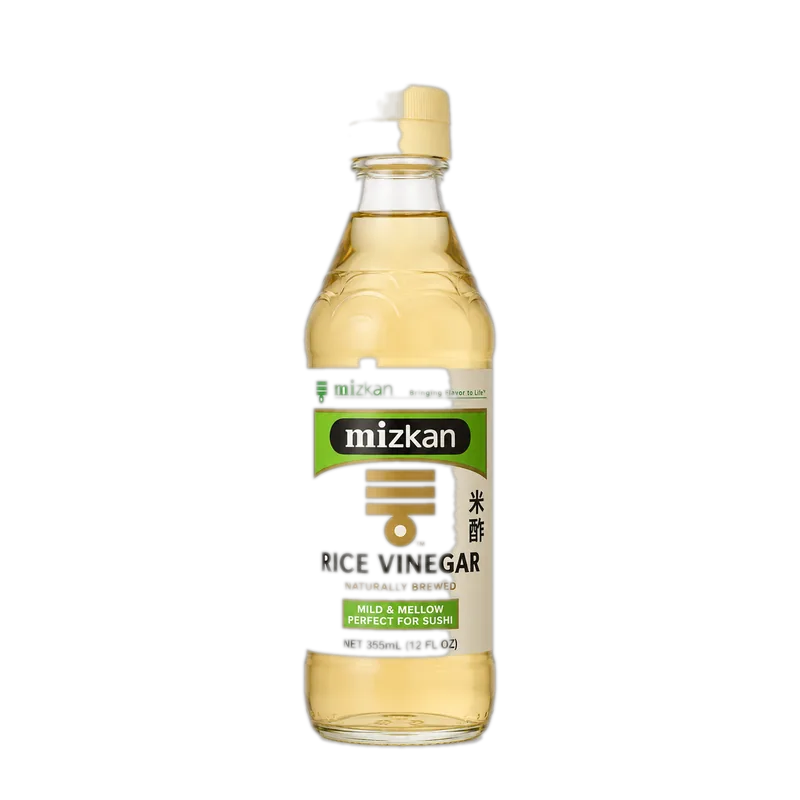
Dress cucumbers. Combine a little rice vinegar, light soy and water, then add sesame oil drop by drop. Toss with sliced cucumber just before eating. The vinegar should still taste bright; the sesame should round it out.
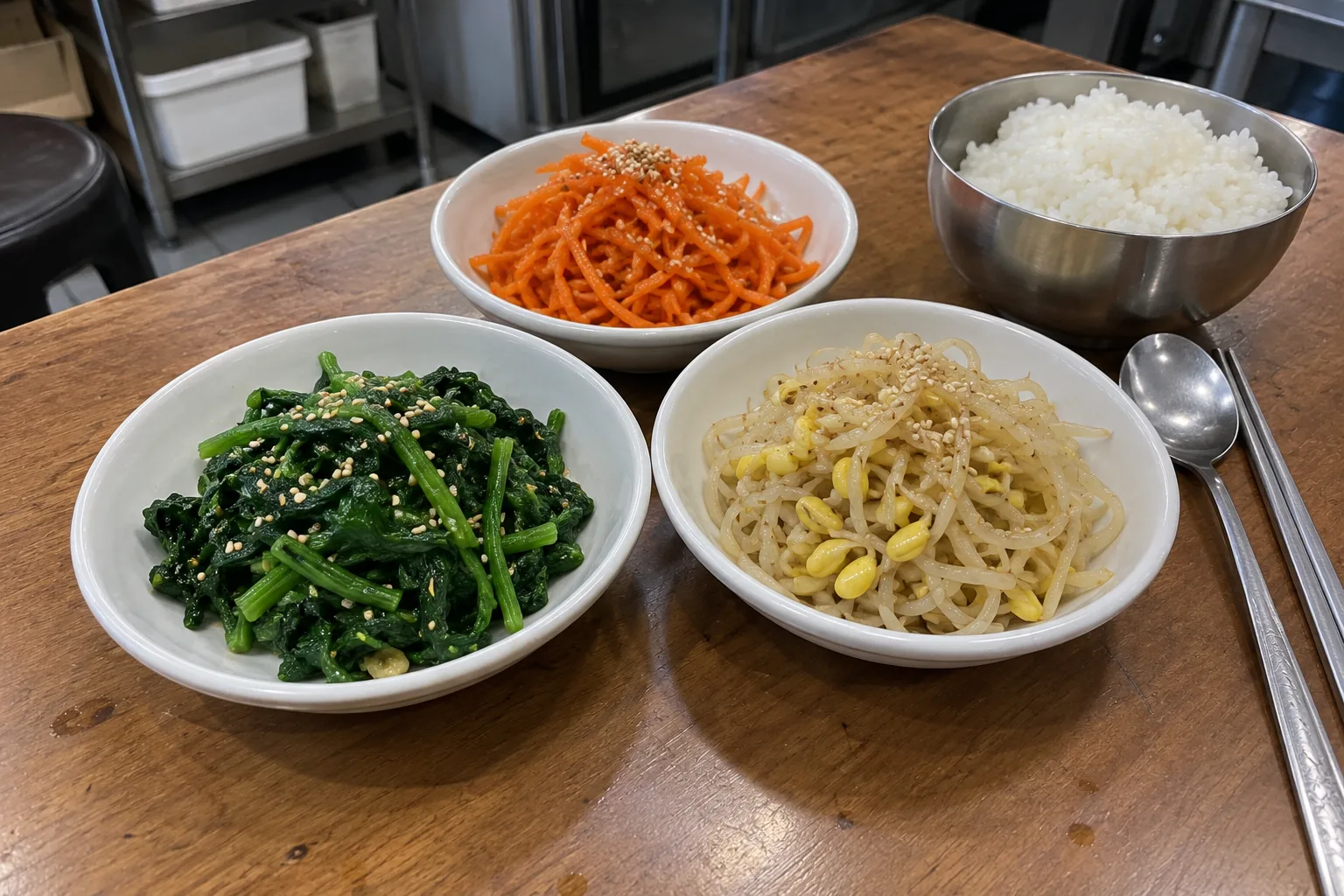
Wake up greens. Stir a small amount through cooked green beans or spinach with garlic and the seasoning of your choice. Taste before reaching for extra soy.
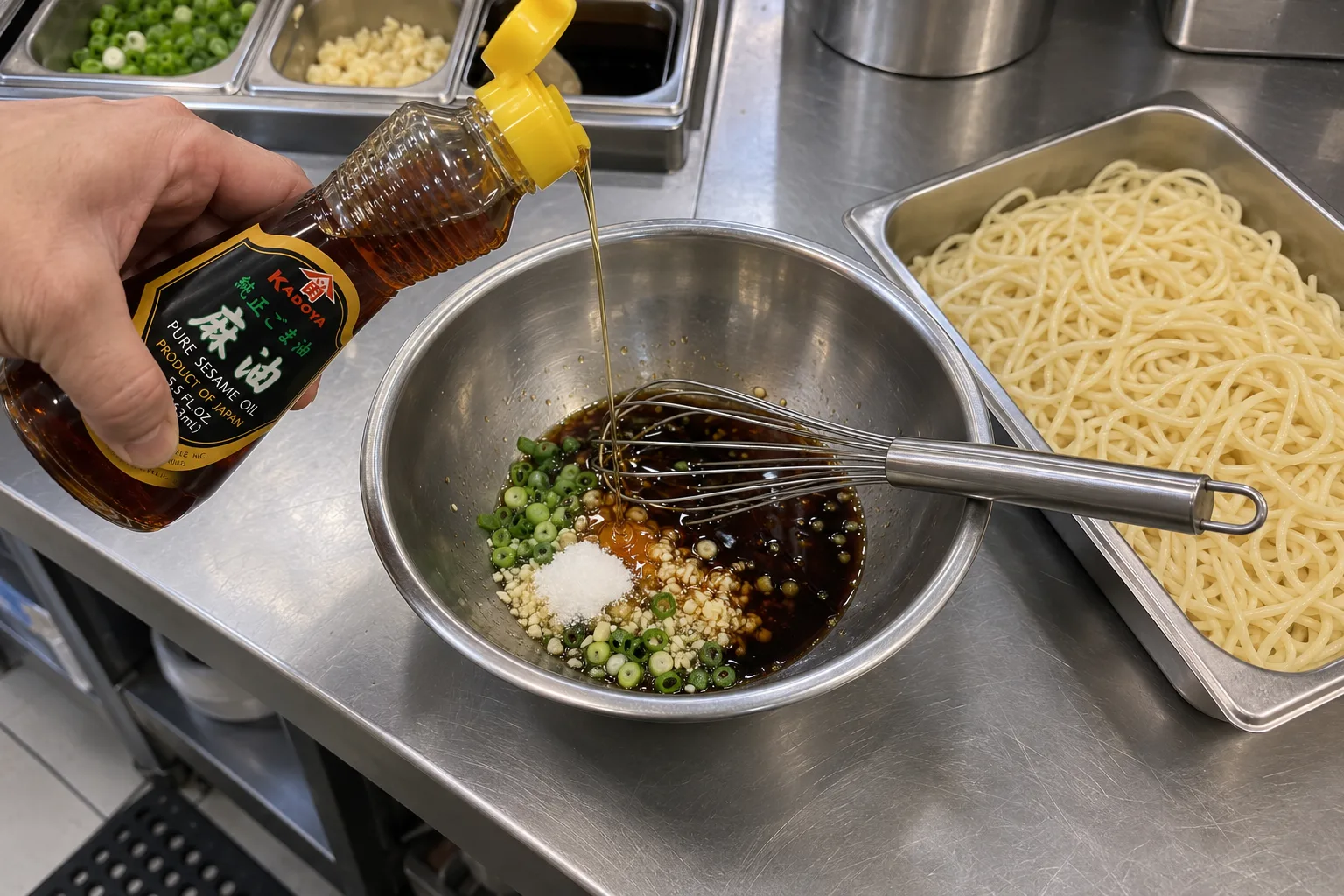
Build a noodle dressing. Mix the oil with a larger quantity of other liquids before adding noodles. This spreads its flavour more evenly and avoids oily pockets.
If dinner tastes overwhelmingly of sesame, extra chilli is unlikely to restore balance. Where practical, increase the plain noodles, vegetables or other unseasoned ingredients instead. Next time, start with less: you can always add more at the table.
What can you substitute for sesame oil?
First ask whether the oil supplies cooking fat or flavour. If a recipe uses a tiny amount of toasted sesame oil at the end, leaving it out is often more sensible than substituting a large amount of another strong oil. Dinner will lose the sesame note, but it can still work.
Toasted sesame seeds can contribute a related flavour and some texture when sesame is suitable for your household. They won't behave exactly like an oil. Tahini or sesame paste changes thickness as well as flavour, so it makes more sense in a dressing you can rebalance than as a drop-for-drop replacement.
For cooking fat, use an oil appropriate to the recipe and your requirements. That replaces the fat's job, without pretending to reproduce toasted sesame's aroma. Sesame-free cooking needs a sesame-free choice, including any garnish.
Storage and freshness
Keep the bottle tightly closed, away from light and heat. Kadoya recommends cool, dark room-temperature storage for its oils and advises using opened oil promptly; it does not recommend refrigerating its products. Follow your own bottle if its directions differ. (Kadoya’s storage FAQs, in Japanese)
Buy for freshness rather than a theoretical maximum shelf life. If the oil has lost its appealing aroma or smells rancid, replacing it is more useful than trying to hide it in a stronger sauce.
Sources and further reading
The linked references explain roast styles, culinary uses, a producer's range and product-specific storage. The serving ideas are flexible suggestions rather than tested recipes.