
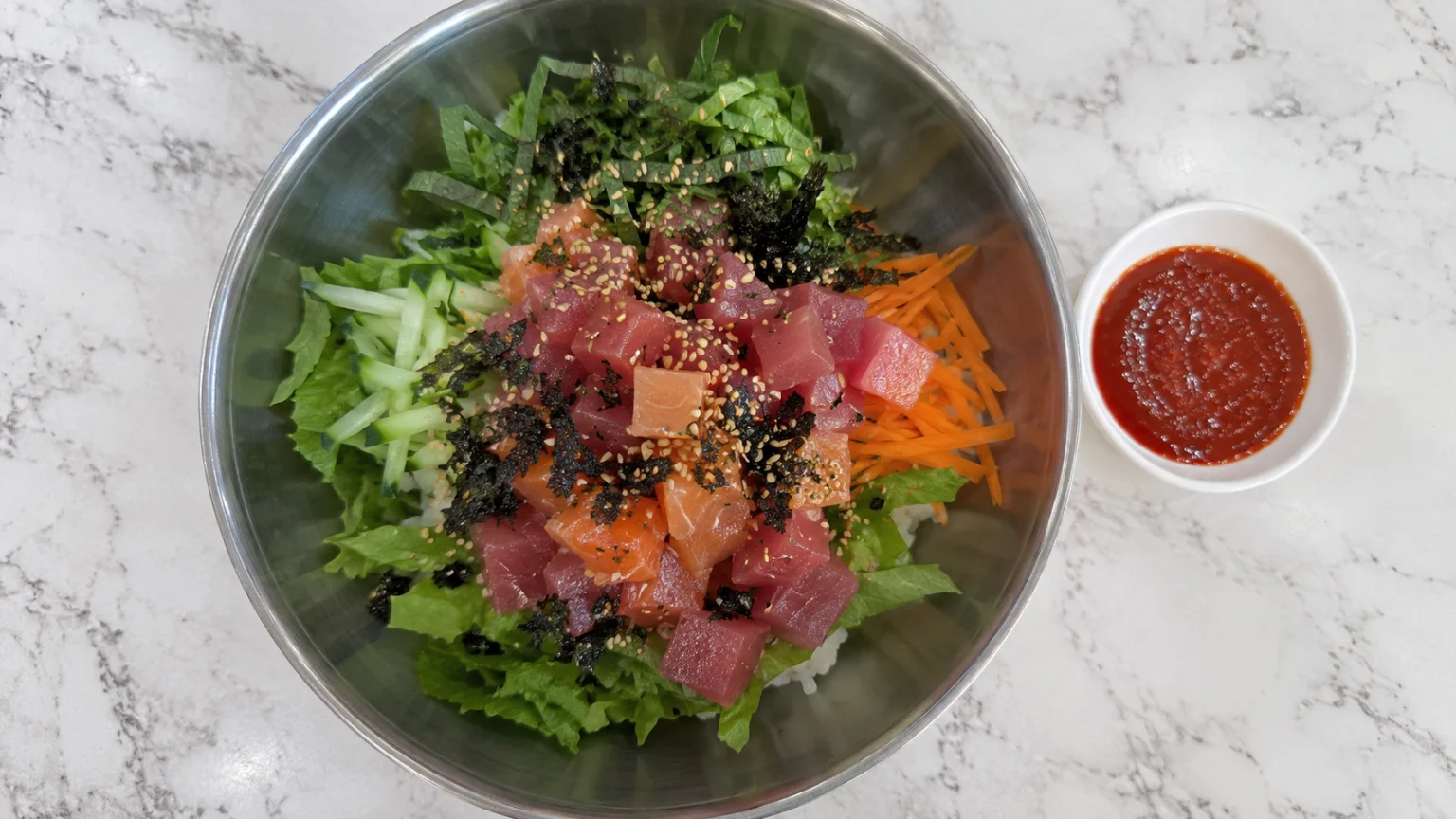
Hoe Deopbap (Korean Raw Fish Rice Bowl)
Warm rice topped with crisp lettuce, perilla, cucumber and cubes of sashimi-grade fish, then mixed with sweet, sour and spicy cho-gochujang. Korea's seaside answer to bibimbap.
Ingredients
- 2 cups cooked short-grain rice, warm
- 250g sashimi-grade fish (salmon, tuna, kingfish or snapper), cut into 1.5cm cubes
- 2 cups shredded iceberg or cos lettuce
- 4-6 perilla leaves, finely shredded
- 1 Lebanese cucumber, cut into matchsticks
- 1 small carrot, cut into matchsticks
- ¼ red onion, very finely sliced and soaked in cold water
- 1 sheet roasted seaweed, crumbled
- 1 tsp sesame oil
- 1 tsp toasted sesame seeds
- 3 tbsp gochujang (for the cho-gochujang)
- 2 tbsp rice vinegar (for the cho-gochujang)
- 1 tbsp sugar or rice syrup (for the cho-gochujang)
- 1 tsp lemon juice (for the cho-gochujang)
- 1 small clove garlic, grated (for the cho-gochujang)
Instructions
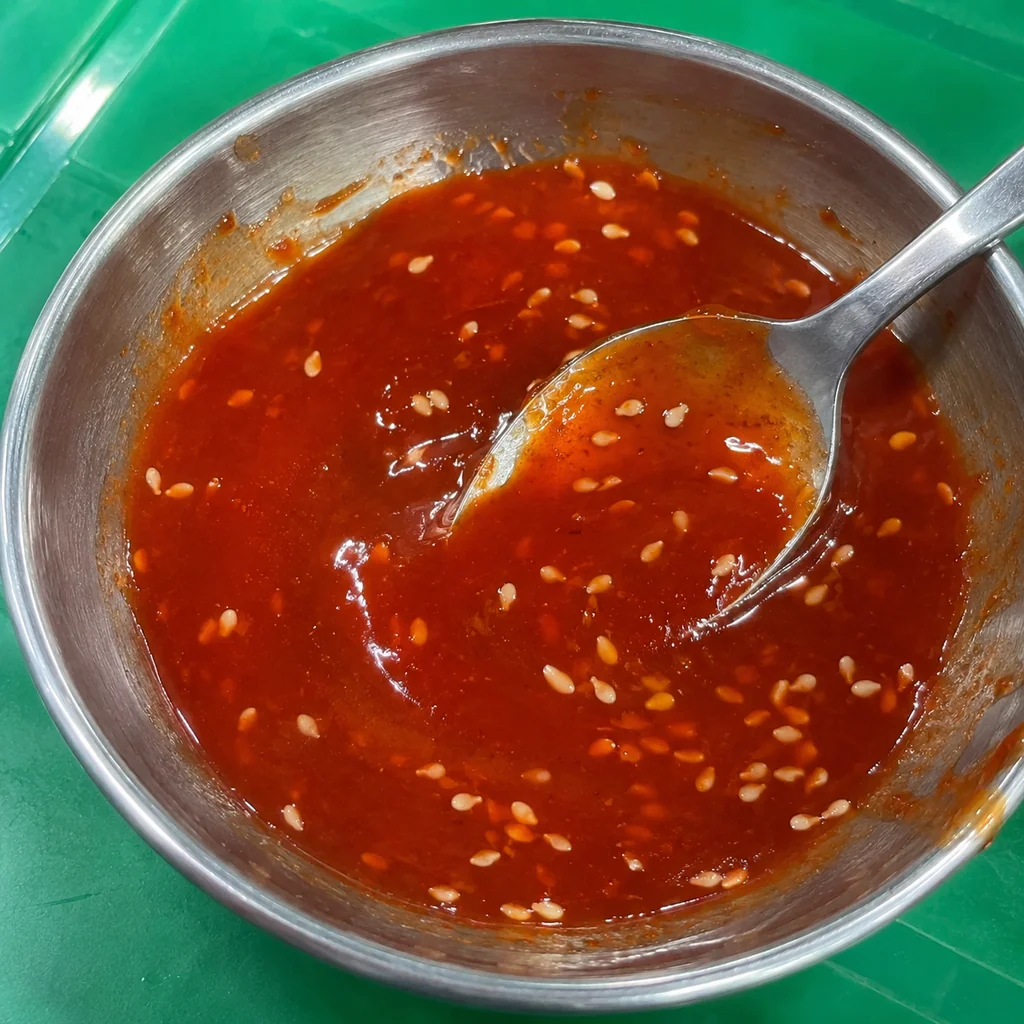
- Mix the gochujang, rice vinegar, sugar, lemon juice and garlic until smooth. This is cho-gochujang. Taste: it should be sweet, sour and spicy in equal measure.
- Keep the fish very cold in the fridge until the last moment. Toss the cubes with the sesame oil just before serving.
- Divide the warm rice between two wide bowls.
- Pile the lettuce, perilla, cucumber, carrot and drained red onion over the rice, then the fish in the middle.
- Scatter with crumbled seaweed and sesame seeds. Serve with the cho-gochujang on the side; spoon in 2-3 tbsp per bowl and mix everything together before eating.
About this dish
Hoe deopbap (회덮밥) means "raw fish over rice". It's what fishermen and seaside restaurants in Korea serve with whatever came in that morning: cubes of raw fish over rice and a big handful of crunchy salad, mixed with cho-gochujang, the sweet and sour gochujang sauce Koreans use with seafood. Mix it hard, like bibimbap, so every bite has rice, fish and crunch.
Compared with Japanese chirashi don or a salmon poke bowl, it's fresher and spicier, with more vegetables. Perilla leaves give it a minty, aniseed lift. Serve with a cup of miyeok guk.
Tips for the best result
- Buy fish labelled sashimi-grade from a fishmonger you trust, and use it the same day.
- The rice should be just warm, not hot, so it doesn't cook the fish or wilt the lettuce.
- Soaking the red onion in cold water for 10 minutes takes away its harsh bite.
Substitutions
- Raw fish: use cooked prawns, smoked salmon or seared tuna if you'd rather not eat raw fish.
- Perilla: a few shiso or mint leaves are the closest swap.
- Gochujang: no swap gives the same flavour; most supermarkets stock it now.
Storage
Eat straight away. Cho-gochujang keeps in a jar in the fridge for 2 weeks.
Hoe deopbap FAQs
What fish is best for hoe deopbap?
In Korea it's often flounder, snapper or rockfish. In Australia, sashimi-grade salmon, tuna or kingfish are easiest to find and all work well. A mix looks great.
What is cho-gochujang?
It's gochujang loosened with vinegar and sugar into a sweet, tangy dipping sauce. Koreans serve it with raw fish, blanched squid and cold noodles.
Is it safe to eat raw fish at home?
Yes, if you buy fish sold for sashimi from a good fishmonger, keep it cold and eat it on the day. Pregnant people and young children should use cooked seafood instead.
More recipes to cook
All recipes

Never miss a recipe
Get practical Asian recipes and pantry guides in your inbox.