
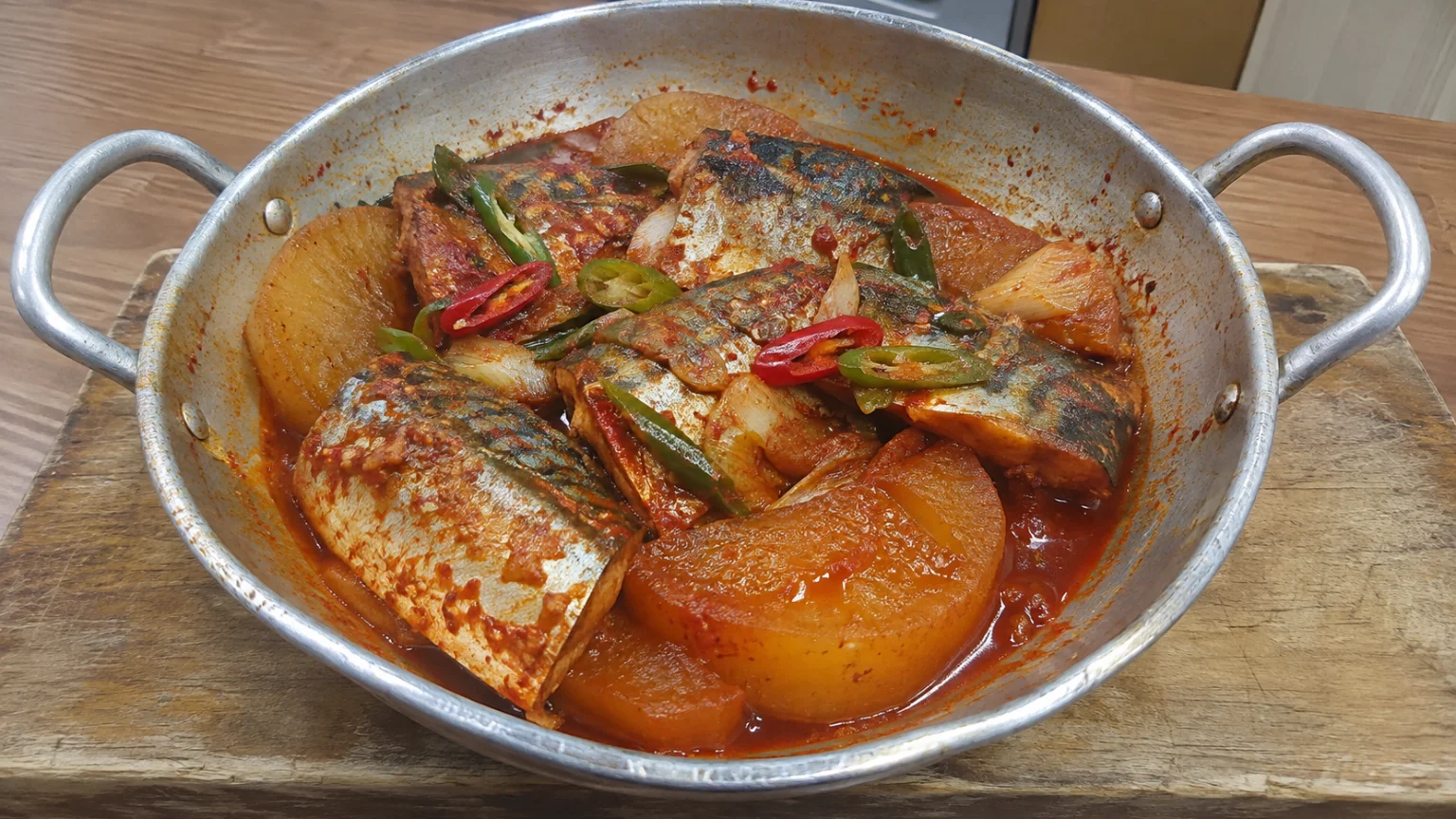
Godeungeo Jorim (Korean Braised Mackerel with Radish)
Mackerel braised over thick slices of radish in a spicy, savoury gochugaru and soy sauce until the radish is soft and full of flavour. A Korean home-cooking classic with rice.
Ingredients
Pantry bits
- 2 mackerel (about 600g total), cleaned and cut into 3-4 pieces each, or 4 mackerel fillets
- 400g Korean or daikon radish, cut into 1.5cm rounds then halved
- 1 onion, thickly sliced
- 1 long green chilli and 1 long red chilli, sliced on an angle
- 2 spring onions, cut into 5cm lengths
- 2 tbsp gochugaru
- 1 tbsp gochujang
- 3 tbsp soy sauce
- 1 tbsp rice wine or mirin
- 1 tbsp sugar
- 5 cloves garlic, minced
- 2cm ginger, grated
- 1 tsp sesame oil
- 400ml water or anchovy stock
Instructions
- Rinse the mackerel and pat dry. If you have time, sprinkle with a little salt and rice wine and leave for 10 minutes, then pat dry again to reduce the fishy smell.
- Mix the gochugaru, gochujang, soy sauce, rice wine, sugar, garlic, ginger and sesame oil into a paste.
- Lay the radish in the bottom of a wide, shallow pan. Add the water and 2 tbsp of the paste, bring to the boil, cover and simmer for 10 minutes until the radish starts to turn translucent.
- Put the mackerel on top of the radish, add the onion and spoon the rest of the paste over the fish.
- Cover and simmer over medium heat for 12-15 minutes, spooning the sauce over the fish every few minutes. Don't stir, or the fish will break.
- Add the chillies and spring onions, uncover and cook 3 minutes more until the sauce has reduced and thickened. Serve in the pan with rice and kimchi.
About this dish
Godeungeo jorim (고등어조림) is mackerel braised in a spicy soy sauce. "Jorim" means to braise and reduce until the sauce is thick and glossy. The fish is cooked on a bed of radish, and many Koreans will tell you the radish is the best part: it soaks up the gochugaru and fish juices until it's soft and sweet.
Mackerel is cheap, rich in omega-3 and full of flavour, and a strong sauce suits it well. Japan does the same fish two ways in our saba misoni and saba shioyaki. If you like radish cooked this way, try sogogi muguk, and serve with kkakdugi on the side.
Tips for the best result
- Cook the radish first. It needs longer than the fish, and a head start means both finish together.
- Spoon the sauce over the fish instead of stirring, so the pieces stay whole.
- Fresh mackerel should have bright eyes and firm flesh. Use it on the day you buy it.
Substitutions
- Mackerel: Spanish mackerel, mullet, hairtail or canned mackerel (add for the last 5 minutes) all work.
- Radish: potato is a popular swap, or use both.
- Milder: drop the gochugaru to 2 tsp and leave out the chillies.
Storage
Keeps 2 days in the fridge, and the radish tastes even better the next day. Reheat gently in a covered pan.
Godeungeo jorim FAQs
How do you get rid of the fishy smell of mackerel?
Salt the pieces with a splash of rice wine for 10 minutes, pat dry, and use plenty of garlic, ginger and gochugaru. Cooking with the lid off for the last few minutes also helps.
What is the difference between jorim and jjim?
Jorim is braised in a small amount of sauce that reduces until glossy. Jjim is braised or steamed with more liquid, so it's saucier, like galbijjim.
Where can I buy Korean radish in Australia?
Korean grocers sell mu, the short, chubby Korean radish. Daikon from supermarkets and Asian grocers works almost as well.
More recipes to cook
All recipes

Never miss a recipe
Get practical Asian recipes and pantry guides in your inbox.