
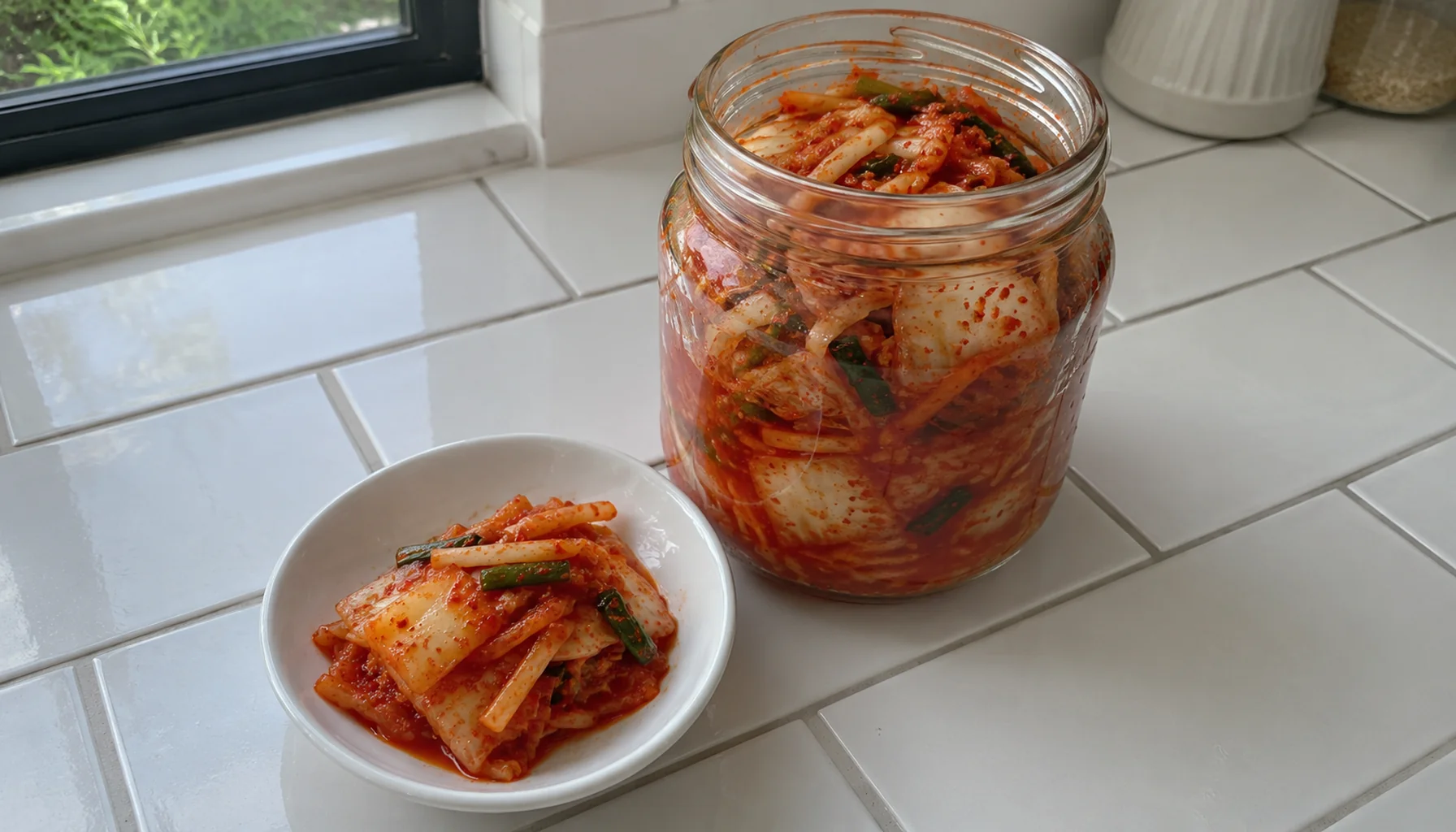
Mak Kimchi (Easy Cabbage Kimchi)
The easiest way to make kimchi at home: wombok cut into pieces, salted, then tossed in a gochugaru, garlic and fish sauce paste. Ready to eat fresh, and even better after a week of fermenting.
Ingredients
Pantry bits
- 1 wombok (napa cabbage), about 2kg
- 1/2 cup (about 100g) coarse sea salt, non-iodised
- 1 tbsp glutinous rice flour
- 1/2 cup (125ml) water
- 1 tbsp sugar
- 1/2 cup (about 40g) gochugaru (Korean chilli flakes), or less for a milder kimchi
- 1/4 cup (60ml) fish sauce
- 1 tbsp saeujeot (Korean salted shrimp), finely chopped (optional)
- 8 garlic cloves, finely grated
- 2cm piece ginger, finely grated
- 200g Korean radish (mu) or daikon, cut into thin matchsticks
- 1 small carrot, cut into thin matchsticks (optional)
- 4 spring onions, cut into 3cm lengths
Instructions
- Cut the wombok in half lengthwise, then into quarters. Cut out the core and slice the leaves into 4-5cm pieces. Rinse in a large bowl of cold water and drain briefly.
- Put the cabbage back in the bowl in layers, sprinkling the salt over each layer, especially the thick white stems. Leave for 1 1/2 to 2 hours, turning it every 30 minutes, until a thick stem bends without snapping.
- Meanwhile, whisk the glutinous rice flour and water in a small saucepan. Cook over medium heat, stirring, for 2-3 minutes until it thickens into a translucent paste. Stir in the sugar and leave it to cool completely.
- Stir the gochugaru, fish sauce, saeujeot (if using), garlic and ginger into the cooled rice paste. Leave it for 10 minutes so the chilli can soak up the liquid.
- Rinse the salted cabbage well in cold water three times to remove the excess salt. Taste a piece: it should be well seasoned but not unpleasantly salty. Drain in a colander for 20 minutes, pressing gently.
- Wearing food-safe gloves, put the cabbage, radish, carrot and spring onion in a large bowl, add the paste and mix with your hands until every piece is evenly coated.
- Pack the kimchi tightly into a clean 2-litre jar or container, pressing down to push out air pockets and leaving 3-4cm of space at the top. Seal.
- Leave at cool room temperature (around 18-22°C) for 1-2 days until it smells pleasantly sour and you see small bubbles, pressing it down once a day. Then move it to the fridge. You can eat it straight away, but it is at its best after a week or two.
About this dish
Mak kimchi (막김치) is the everyday, cut-up kind of kimchi. Traditional baechu kimchi keeps the cabbage in whole halves and spreads the paste leaf by leaf. Mak kimchi uses the same ingredients but chops the cabbage first, so it is quicker to make and ready to serve straight from the jar.
The heat and colour come from gochugaru, Korean chilli flakes that are fruity and only moderately hot. Fish sauce and a little salted shrimp add savoury depth and help the ferment along. Homemade kimchi is the base for some of Korea's best comfort food: kimchi jjigae, kimchi fried rice, kimchi pancakes and dubu kimchi. It is also the classic partner for bossam.
Tips for the best result
- Use coarse, non-iodised sea salt. Fine table salt is much saltier by volume and iodine can slow fermentation.
- The bend test is the best guide: under-salted cabbage stays crunchy and watery, over-salted cabbage goes limp and too salty.
- Wear gloves when mixing. Gochugaru and garlic will sting any small cuts and stain your skin.
- Always press the kimchi under its own liquid with a clean spoon after taking some out.
Substitutions
- Vegan kimchi: replace the fish sauce and salted shrimp with 3 tbsp light soy sauce, or a mix of soy and miso. It still ferments well.
- Glutinous rice flour: plain flour or a small cooked potato, mashed, can be used to make the paste. The rice paste helps the chilli cling and feeds the ferment, but you can leave it out.
- Radish: daikon is easy to find in Australia and works well. Nashi pear or apple, grated, adds a gentle sweetness.
Storage
Kimchi keeps in the fridge for 3 months or more. It slowly gets more sour. Use young kimchi as a side dish, and save older, sour kimchi for stews and fried rice, where it tastes best.
Kimchi FAQs
How long does kimchi need to ferment?
You can eat it fresh on the day. For a classic tangy flavour, leave it at room temperature for 1-2 days, then refrigerate. It keeps developing flavour in the fridge over the following weeks.
Is it normal for kimchi to be fizzy or bubble?
Yes. Bubbles and a little fizz are signs of healthy lactic fermentation. Open the jar over the sink in the first few days, as the liquid can rise. Throw it out if you see fuzzy mould or it smells rotten rather than sour.
Can I use regular chilli flakes instead of gochugaru?
Not really. Ordinary chilli flakes are much hotter and lack the sweet, smoky flavour and deep red colour. Look for gochugaru at Asian grocers; the coarse kind is used for kimchi.
More recipes to cook
All recipes



Never miss a recipe
Get practical Asian recipes and pantry guides in your inbox.