
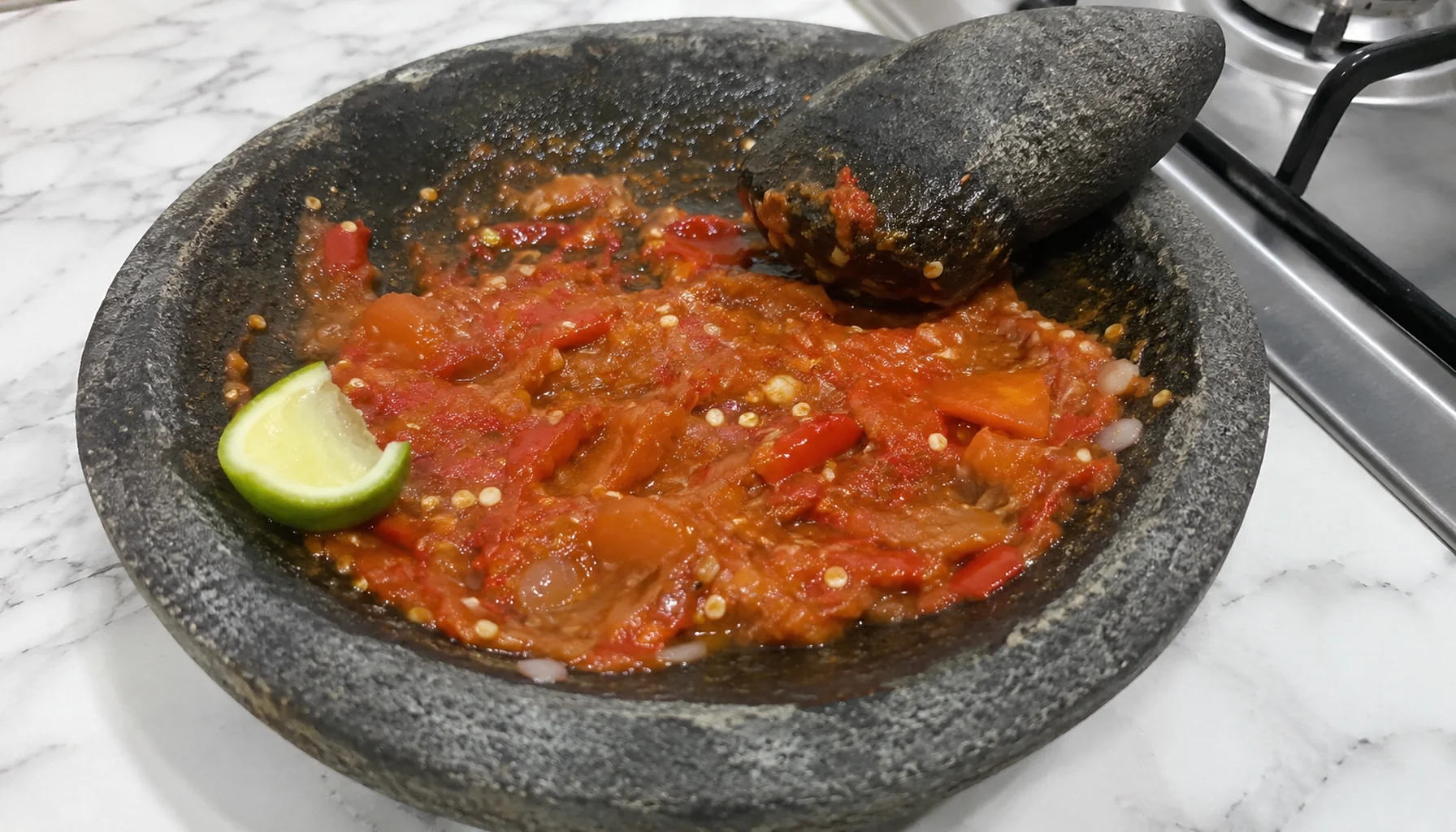
Sambal Terasi (Indonesian Shrimp Paste Sambal)
Indonesia's everyday table sambal: fresh chillies, shallot, garlic and tomato fried, then ground with toasted shrimp paste and palm sugar. Fiery, savoury and ready in 20 minutes.
Ingredients
Pantry bits
- 10 long red chillies (about 150g), roughly chopped
- 5-10 bird's eye chillies, to taste
- 6 red Asian shallots (about 90g), peeled
- 3 garlic cloves, peeled
- 1 medium tomato, quartered
- 2 tsp (about 10g) terasi (fermented shrimp paste)
- 1 tbsp grated palm sugar or brown sugar
- 1/2 tsp salt
- 3 tbsp neutral oil
- 1 lime, to serve
Instructions
- Wrap the terasi in a small square of foil and toast it in a dry frying pan over medium heat for 1-2 minutes on each side, until fragrant and crumbly. It is pungent, so turn on the rangehood.
- Heat the oil in the same pan over medium heat. Add the chillies, shallots, garlic and tomato and fry for 5-6 minutes, stirring, until softened and the shallots are lightly golden at the edges.
- Transfer everything, including the oil, to a cobek or mortar and pestle, or a small food processor. Add the toasted terasi, palm sugar and salt.
- Grind or pulse to a coarse paste. Sambal terasi should have some texture, not be completely smooth.
- For a longer-keeping sambal, return it to the pan and cook over medium-low heat for 2-3 minutes more, stirring, until it darkens slightly and the oil starts to separate.
- Taste and adjust the salt and sugar. Squeeze over a little lime just before serving.
About this dish
Sambal terasi is the chilli sambal most Indonesian households keep on the table. It is fresh chillies ground with shallot, garlic and tomato, with toasted terasi (fermented shrimp paste) for a deep, savoury punch. This version fries the ingredients first, which mellows the raw edge and makes it keep longer. A raw version (sambal terasi mentah) skips the frying and is sharper and hotter.
Serve it with fried and grilled dishes like ayam penyet, ayam goreng, ikan bakar and ayam bakar, or spoon it over mie ayam and nasi uduk. Read more about fermented shrimp paste in our glossary.
Tips for the best result
- Toast the terasi first. Raw shrimp paste tastes harsh and fishy; toasting turns it nutty and savoury.
- Control the heat with the bird's eye chillies. Long red chillies give colour and body without too much fire.
- Add lime to each serve rather than the whole jar. It keeps the flavour fresh and the sambal lasts longer.
Substitutions
- Terasi: Malaysian belacan is essentially the same product and can be used one for one. Thai kapi is softer but works too.
- Palm sugar: Indonesian gula jawa or gula merah is ideal; Thai palm sugar or brown sugar is fine.
- Lime: Indonesians often use small jeruk limau or calamansi. A regular lime is a good stand-in.
Storage
Keep the cooked sambal in a clean jar in the fridge, topped with a thin layer of oil, for up to 2 weeks. Always use a clean spoon. It also freezes well in small portions for up to 3 months.
Sambal terasi FAQs
What is the difference between sambal terasi and sambal oelek?
Sambal oelek is a simple paste of ground chillies and salt, sometimes with vinegar. Sambal terasi adds toasted shrimp paste, shallot, garlic and often tomato and sugar, so it is richer and more savoury.
Is terasi the same as belacan?
Yes, more or less. Both are fermented shrimp paste sold in blocks: terasi is the Indonesian name and belacan the Malay name.
Can I make sambal terasi without shrimp paste?
You can make a chilli sambal without it, but it won't be sambal terasi. Add a little extra salt and a squeeze of lime to balance the flavour.
More recipes to cook
All recipes


Never miss a recipe
Join thousands of subscribers and get our best recipes delivered direct to your inbox.