
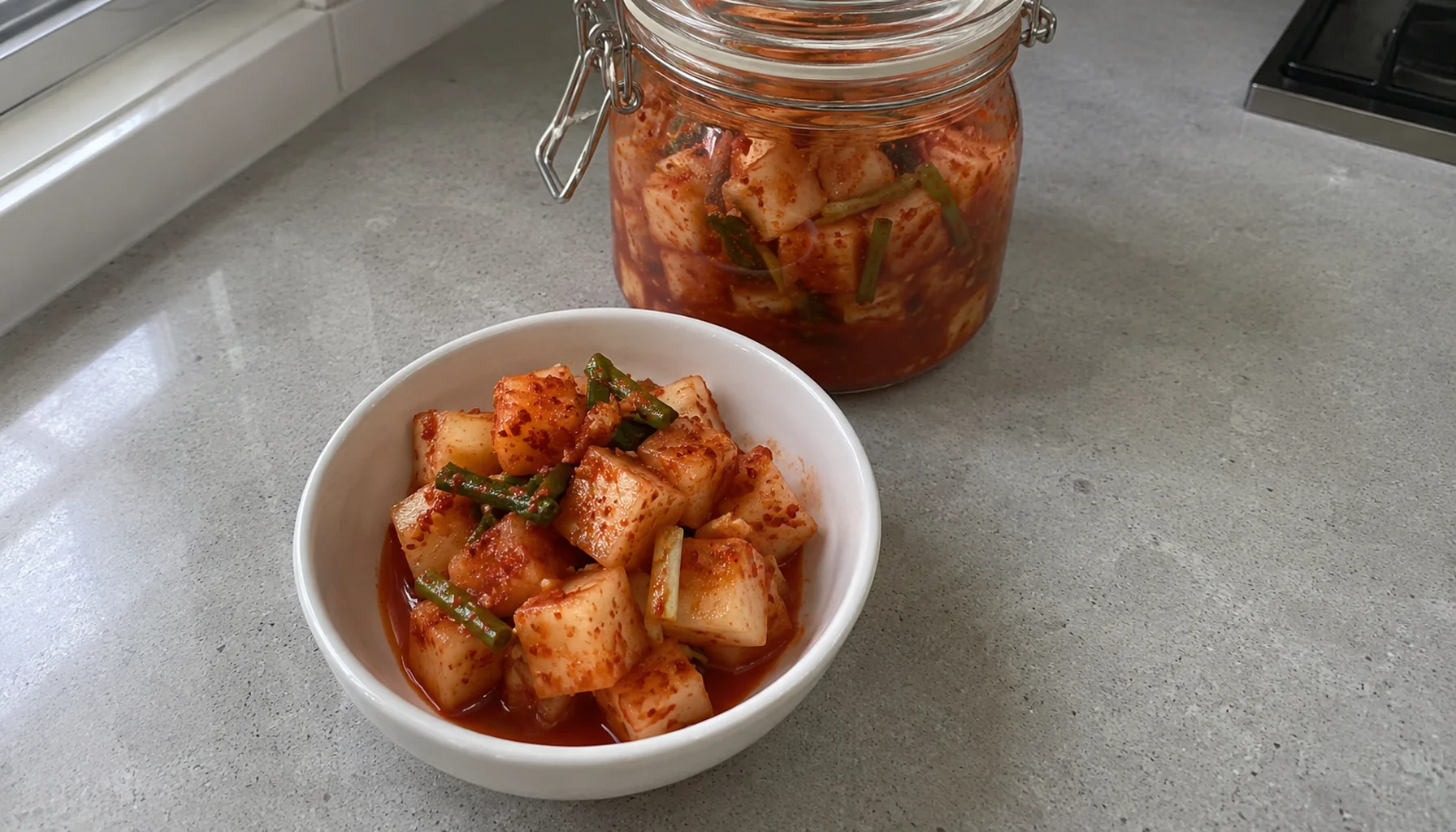
Kkakdugi (Korean Cubed Radish Kimchi)
Crunchy cubes of Korean radish tossed in a gochugaru, garlic and fish sauce paste, then left to ferment. The kimchi served with seolleongtang, fried chicken and every Korean barbecue.
Ingredients
Pantry bits
- 1.5kg Korean radish (mu) or daikon
- 1 1/2 tbsp coarse sea salt, non-iodised
- 1 1/2 tbsp sugar
- 1/3 cup (about 25g) gochugaru (Korean chilli flakes)
- 2 1/2 tbsp fish sauce
- 1 tbsp saeujeot (Korean salted shrimp), finely chopped (optional)
- 6 garlic cloves, finely grated
- 1cm piece ginger, finely grated
- 1 tbsp glutinous rice flour cooked with 1/3 cup (80ml) water into a paste, cooled (optional)
- 4 spring onions, cut into 2cm lengths
Instructions
- Peel the radish and cut it into 2cm cubes. Put them in a large bowl.
- Sprinkle over the salt and sugar and toss well. Leave for 30-40 minutes, tossing once or twice, until the radish has released some liquid and a cube bends slightly when squeezed.
- Drain the radish in a colander, keeping about 2 tbsp of the liquid. Do not rinse it.
- Return the radish to the bowl and add the gochugaru. Toss until every cube is stained red; this gives the deep colour before the wet ingredients go in.
- Add the fish sauce, saeujeot (if using), garlic, ginger, rice paste (if using), the reserved liquid and the spring onion. Mix well with gloved hands.
- Pack into a clean 2-litre jar, pressing down firmly, and leave 3-4cm of space at the top. Seal.
- Leave at cool room temperature for 1-2 days until it smells pleasantly sour and you see small bubbles, then refrigerate. It can be eaten straight away, but tastes best after 4-5 days.
About this dish
Kkakdugi (깍두기) is the radish kimchi that comes with almost every Korean meal, cut into chunky cubes that stay crisp and juicy for weeks. It is the classic side for beef soups like galbitang, for Korean fried chicken, and for a table of samgyeopsal or LA galbi.
It is also the easiest kimchi to make. There is no cabbage to salt leaf by leaf: you cube the radish, salt it briefly, then toss it with gochugaru and fish sauce. If you have made our easy cabbage kimchi, this is the natural next jar.
Tips for the best result
- Choose a firm, heavy radish with smooth skin. Korean mu is sweeter and denser than daikon, but daikon from any Australian supermarket works well.
- Rub the gochugaru in before the wet ingredients. The dry chilli clings to the radish and gives that deep red colour.
- Don't rinse the salted radish. Unlike cabbage, it takes up just enough salt in 30 minutes.
- If your radish tastes a little bitter, add an extra teaspoon of sugar or some grated nashi pear.
Substitutions
- Vegan kkakdugi: replace the fish sauce and salted shrimp with 2 tbsp light soy sauce and 1 tsp extra salt.
- Saeujeot: leave it out if you can't find it, or add an extra teaspoon of fish sauce.
- Rice paste: optional. It helps the seasoning cling, but kkakdugi makes plenty of its own juice.
Storage
Kkakdugi keeps in the fridge for up to 2 months. Always press the cubes back under the liquid after serving. As it gets more sour, use it in fried rice or chop it into stews.
Kkakdugi FAQs
What is the difference between kkakdugi and kimchi?
Kkakdugi is a type of kimchi. Most people mean cabbage kimchi when they say kimchi; kkakdugi uses cubed radish with a similar seasoning, so it is crunchier and juicier.
Why is my kkakdugi watery?
Radish releases a lot of liquid as it ferments. That juice is normal and delicious; Koreans often add a spoonful to soups and fried rice.
How long does kkakdugi take to ferment?
One to two days at room temperature starts it, then about 4-5 days in the fridge gives the classic tangy flavour.
More recipes to cook
All recipes
Never miss a recipe
Get practical Asian recipes and pantry guides in your inbox.