
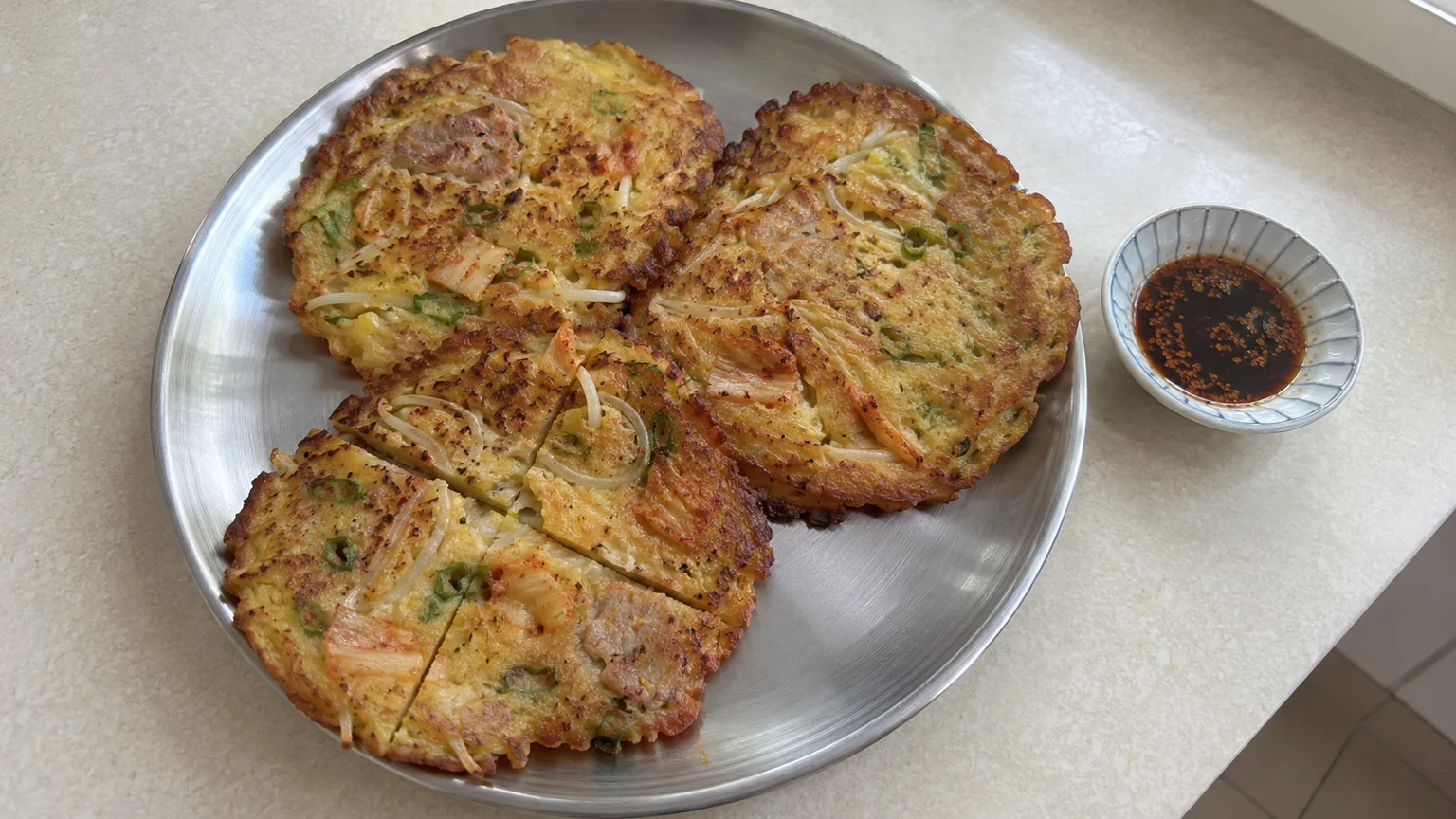
Bindaetteok (Korean Mung Bean Pancakes)
Crisp, golden pancakes made from soaked and blended mung beans with kimchi, pork and bean sprouts, shallow-fried and served with a soy vinegar dipping sauce.
Ingredients
Pantry bits
- 250g split peeled (yellow) mung beans, soaked in cold water for at least 6 hours or overnight
- 2 tbsp glutinous rice flour or plain flour
- 200g pork mince
- 1 tsp soy sauce, plus 3 tbsp for the dipping sauce
- 1 clove garlic, grated
- 1 tsp sesame oil
- 150g cabbage kimchi, squeezed and chopped
- 100g bean sprouts, blanched for 1 minute and squeezed dry
- 3 spring onions, sliced
- 1 tsp salt
- 2 tbsp rice vinegar
- 1/2 tsp gochugaru
- Neutral oil, for frying
Instructions
- Drain the mung beans. Blend them with 150ml fresh water and the flour to a thick, slightly gritty batter, like thick pancake batter.
- Mix the pork with 1 tsp soy sauce, the garlic and sesame oil.
- Stir the pork, kimchi, bean sprouts, spring onion and salt into the batter.
- Mix 3 tbsp soy sauce with the rice vinegar, gochugaru and 1 tbsp water for the dipping sauce.
- Heat 3 tbsp oil in a large frying pan over medium heat. Spoon in about 1/2 cup of batter per pancake and spread to 1cm thick. Fry for 4 minutes until deep golden and crisp underneath.
- Flip and fry for another 4 minutes, pressing down gently, until golden and the pork is cooked through. Add more oil between batches; these pancakes like plenty.
- Drain on paper towel and serve hot with the dipping sauce.
About this dish
Bindaetteok (빈대떡) are Korean pancakes made from ground mung beans rather than flour. They are thicker and nuttier than haemul pajeon, with a lacy, crunchy edge, and they are a famous market snack at Gwangjang Market in Seoul, usually eaten with makgeolli rice wine.
The batter carries chopped kimchi (try our easy mak kimchi), pork and bean sprouts, and the dipping sauce is simple soy, vinegar and a pinch of gochugaru. If you like this, try kimchi jeon next.
Tips for the best result
- Soak the beans well. They should crush easily between your fingers before you blend them.
- Don't blend the batter completely smooth; a little texture gives better crunch.
- Be generous with the oil and keep the heat at medium so the centre cooks before the outside darkens.
Substitutions
- Vegetarian: leave out the pork and add sliced shiitake or extra kimchi.
- Gluten free: use glutinous rice flour and tamari instead of soy sauce.
- Bean sprouts: use soybean sprouts (kongnamul) if you have them.
Storage
Cooked pancakes keep in the fridge for 3 days or the freezer for 1 month. Reheat in a dry frying pan or air fryer until crisp.
Bindaetteok FAQs
Do I need to peel mung beans for bindaetteok?
Yes. Buy split, peeled yellow mung beans so there is no skin to remove. Whole green mung beans need to be soaked and rubbed to remove the skins, which takes much longer.
What is the difference between bindaetteok and pajeon?
Pajeon is a flour batter pancake built around spring onions. Bindaetteok uses ground mung beans, so it is thicker, nuttier and naturally almost gluten free.
Where can I buy peeled mung beans in Australia?
Asian and Indian grocers sell them in bags. They are labelled "split mung beans", "peeled mung beans" or "moong dal" (the yellow kind).
More recipes to cook
All recipes


Never miss a recipe
Get practical Asian recipes and pantry guides in your inbox.