
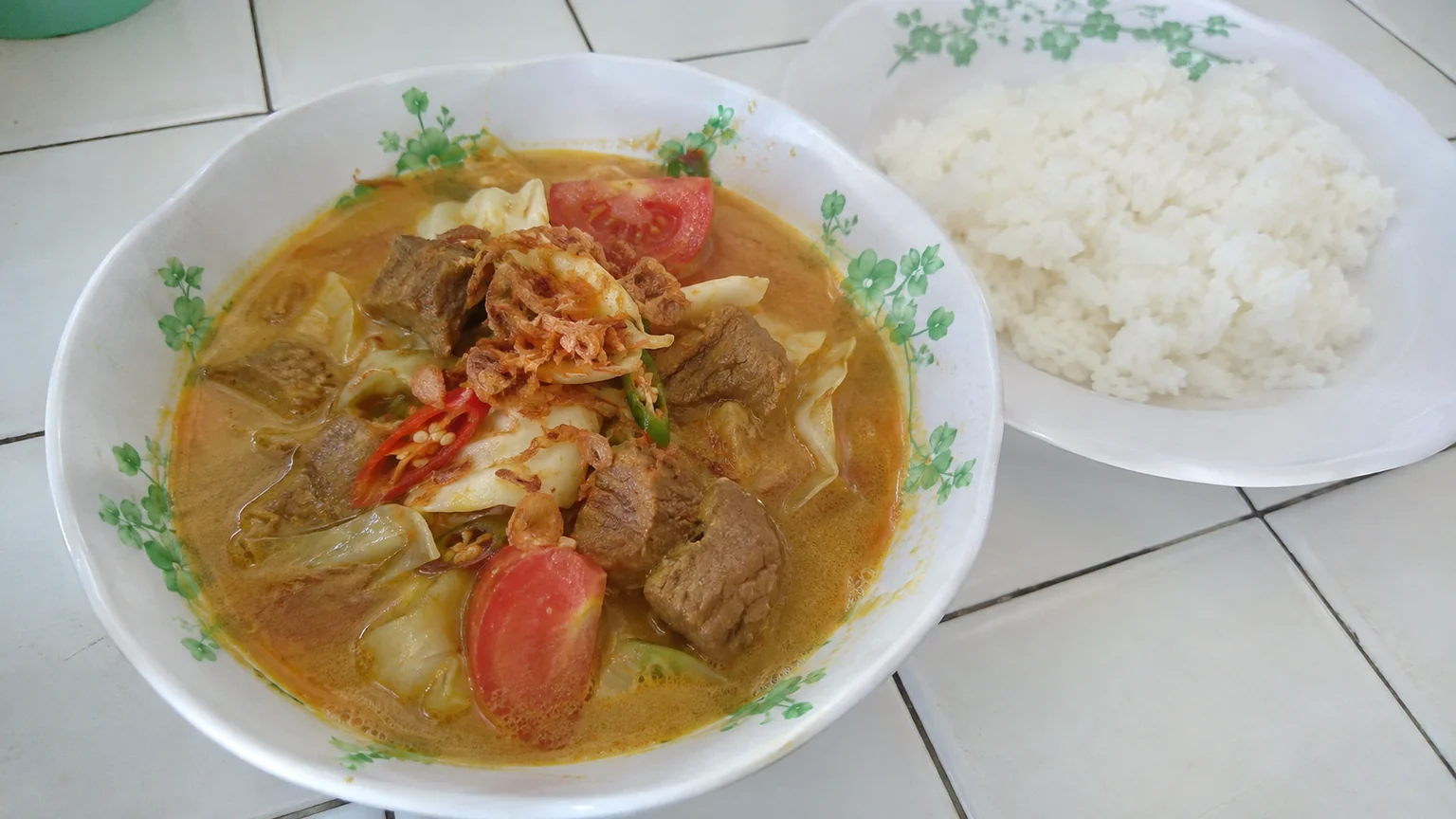
Tongseng Kambing (Javanese Lamb Curry)
A Central Javanese lamb curry with a light coconut broth, sweet soy, cabbage and tomato, finished with chilli. Sweet, savoury and spicy, all in one wok.
Ingredients
- 700g boneless lamb shoulder or leg, cut into 2cm pieces
- Spice paste: 6 red Asian shallots, 4 cloves garlic, 3 candlenuts (kemiri), 2cm ginger, 2cm turmeric (or 1 tsp ground), 1 tsp ground coriander, 1/2 tsp white pepper
- 2 tbsp neutral oil
- 1 stalk lemongrass, bruised
- 3 kaffir lime leaves
- 2cm piece galangal, sliced
- 500ml water
- 200ml coconut milk
- 3 tbsp kecap manis (Indonesian sweet soy sauce)
- 1 tsp salt
- 1/4 small white cabbage, roughly chopped
- 2 tomatoes, cut into wedges
- 3-5 bird's eye chillies, sliced (to taste)
- Crispy fried shallots and steamed rice, to serve
Instructions
- Blend the spice paste ingredients to a smooth paste with a splash of water.
- Heat the oil in a wok or large pot over medium heat and fry the paste with the lemongrass, lime leaves and galangal for 4-5 minutes until fragrant and cooked.
- Add the lamb and stir-fry for 3-4 minutes until browned all over.
- Pour in the water, bring to the boil, then cover and simmer gently for 25-30 minutes until the lamb is tender.
- Add the coconut milk, kecap manis and salt and simmer for 5 minutes.
- Add the cabbage, tomatoes and chillies and cook for 2-3 minutes, just until the cabbage wilts but still has some crunch. Taste and adjust with salt or more kecap manis.
- Serve with rice and a scattering of crispy fried shallots.
About this dish
Tongseng is a street-food curry from Solo (Surakarta) in Central Java, traditionally made with goat (kambing). It sits between a curry and a stir-fry: tender meat in a light, spiced coconut broth, sweetened with kecap manis, with cabbage and tomato tossed in at the end so they stay fresh. In Australia, lamb shoulder is the easiest swap for goat.
The spice paste is thickened with candlenuts (kemiri), the same nut used in opor ayam. For other Javanese meat dishes, try semur daging or rawon.
Tips for the best result
- Cook the paste properly before the meat goes in, until it darkens slightly and smells sweet.
- Add the cabbage right at the end. It should be just wilted, not soft.
- Balance at the end: tongseng should taste sweet, salty and spicy all at once.
Substitutions
- Goat: use it if your butcher has it; simmer for 1 hour or until tender.
- Candlenuts: macadamias are the closest swap.
- Coconut milk: use light coconut milk for a thinner broth.
Storage
Keeps in the fridge for 3 days. Freeze without the cabbage and tomato for up to 2 months, then add them fresh when reheating.
Tongseng FAQs
What is the difference between tongseng and gulai?
Gulai is a rich, coconut curry. Tongseng starts like a lighter gulai, then adds kecap manis, cabbage and tomato and is finished quickly, almost like a stir-fry.
What is kemiri in English?
Kemiri is candlenut, a waxy nut used to thicken and enrich Indonesian spice pastes. It must be cooked before eating.
Where can I buy candlenuts and kecap manis in Australia?
Asian and Indonesian grocers sell candlenuts in small bags. Kecap manis is in most supermarkets in the Asian aisle (ABC is a common brand).
More recipes to cook
All recipes


Never miss a recipe
Get practical Asian recipes and pantry guides in your inbox.