
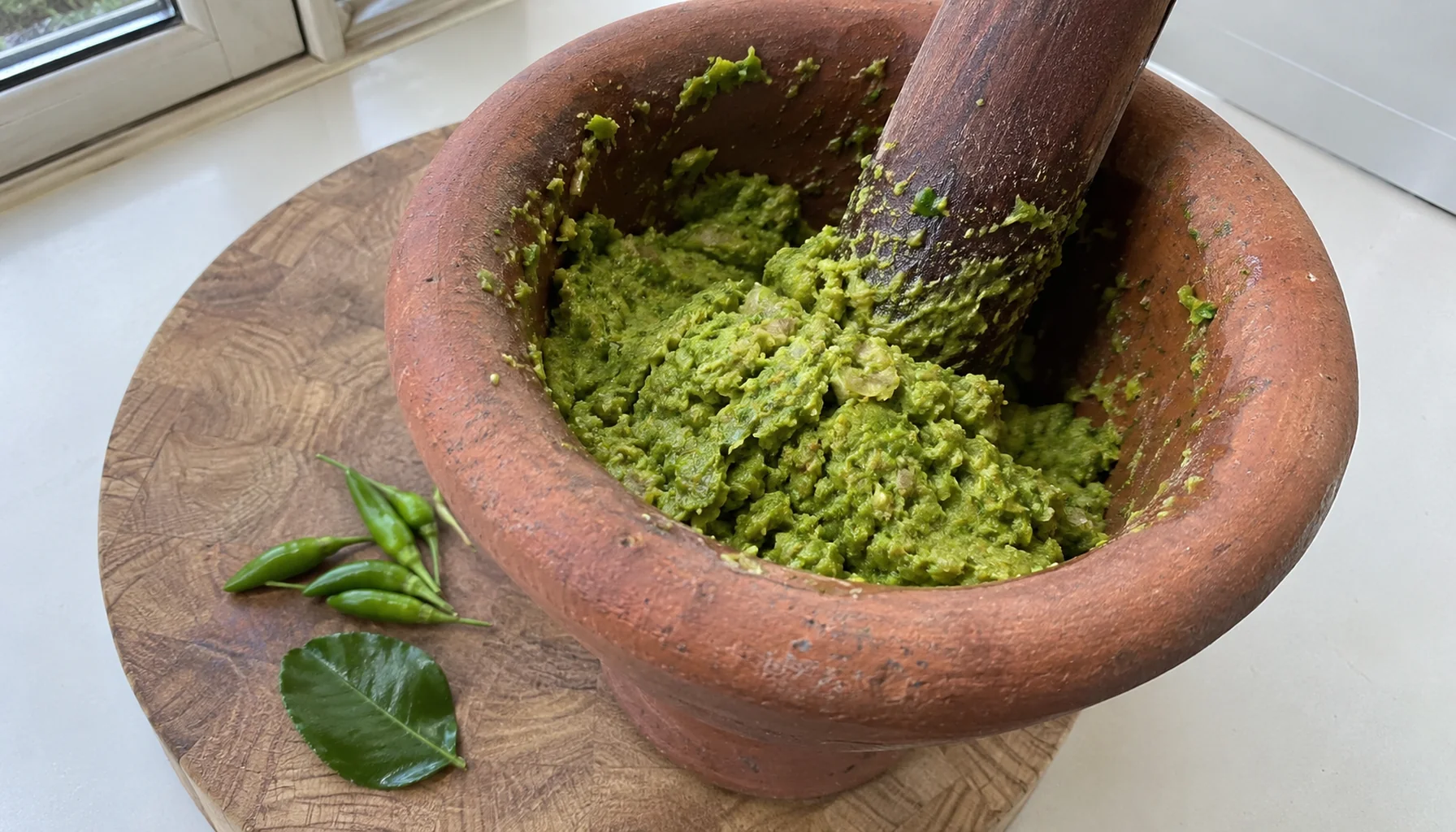
Thai Green Curry Paste (Nam Prik Gaeng Keow Wan)
A fresh, fragrant homemade Thai green curry paste of green chillies, lemongrass, galangal, coriander root and shrimp paste. Makes enough for three or four curries and freezes well.
Ingredients
Pantry bits
- 15-20 green bird's eye chillies, roughly chopped (use fewer for a milder paste)
- 3 long green chillies, seeded and chopped
- 3 lemongrass stalks, pale part only, thinly sliced
- 3cm piece galangal, peeled and thinly sliced
- 4 makrut (kaffir) lime leaves, centre vein removed, finely shredded
- Zest of 1 makrut lime or 1 regular lime
- 6 coriander roots with a little stem, scraped and chopped
- 4 red Asian shallots, chopped
- 8 garlic cloves, chopped
- 1 tsp coriander seeds
- 1/2 tsp cumin seeds
- 1/2 tsp ground white pepper
- 1 tsp fermented shrimp paste (kapi)
- 1 tsp sea salt
- A small handful of Thai basil leaves (optional, for colour)
Instructions
- Toast the coriander and cumin seeds in a dry frying pan over medium heat for 1-2 minutes until fragrant. Grind to a powder with the white pepper in a mortar or spice grinder.
- Wrap the shrimp paste in a small square of foil and toast it in the same pan for 1 minute on each side, until it smells strong and toasty. Let it cool.
- If using a mortar and pestle, pound the salt with the chillies first, then add the lemongrass, galangal, lime leaves and zest, one at a time, pounding each to a rough paste before adding the next. Hard, fibrous ingredients go in first.
- Add the coriander root, shallot and garlic and keep pounding until fairly smooth. Finally pound in the ground spices, shrimp paste and basil (if using). This takes about 20 minutes.
- If using a food processor, put everything in the bowl with 1-2 tbsp water or oil and blitz for 3-4 minutes, scraping down the sides often, until it is as smooth as possible.
- Use straight away, or pack into a clean jar and cover the top with a thin layer of oil.
About this dish
Green curry paste (พริกแกงเขียวหวาน, nam prik gaeng keow wan) is the base of Thailand's best-known curry. Homemade paste is brighter, fresher and more fragrant than anything from a jar, because it is made from fresh green chillies and herbs rather than dried ones. That is the main difference from our Thai red curry paste, which uses dried red chillies for a deeper, smokier flavour.
One batch makes enough for three or four curries. Use about 3 tablespoons for our Thai green curry with chicken, fry it in thick coconut cream until fragrant, then add coconut milk, fish sauce and palm sugar. Our guide to Thai curries explains how the green, red, yellow, massaman and panang pastes differ.
Tips for the best result
- Slice the lemongrass and galangal as thinly as you can before pounding or blending. They are fibrous, and thin slices break down much faster.
- A mortar and pestle gives the best flavour because it crushes the herbs rather than chopping them, but a small food processor gets you 90% of the way.
- Coriander root holds most of the flavour. Look for bunches with roots at Asian grocers or farmers' markets.
- Wear gloves when handling this many chillies.
Substitutions
- Galangal: fresh or frozen galangal is best. Ginger tastes quite different, but it will do at a pinch.
- Shrimp paste: leave it out for a vegan paste and add 1/2 tsp extra salt or 1 tsp white miso.
- Makrut lime leaves: fresh or frozen. Use the zest of a regular lime if you can't find makrut limes.
Storage
Keep the paste in the fridge, covered with a thin film of oil, for up to 1 week. To freeze, spoon 3 tbsp portions into an ice-cube tray, freeze, then tip into a bag. It keeps for 3 months and can go straight into the pan from frozen.
Green curry paste FAQs
How hot is homemade green curry paste?
Very hot with 20 bird's eye chillies. For a medium paste, use 8-10 and add the long green chillies for colour.
Why is my green curry not very green?
Restaurant curries are often coloured with extra herbs. Add a handful of Thai basil or coriander leaves to the paste, and avoid cooking the curry too long after adding it.
More recipes to cook
All recipes

Never miss a recipe
Get practical Asian recipes and pantry guides in your inbox.