
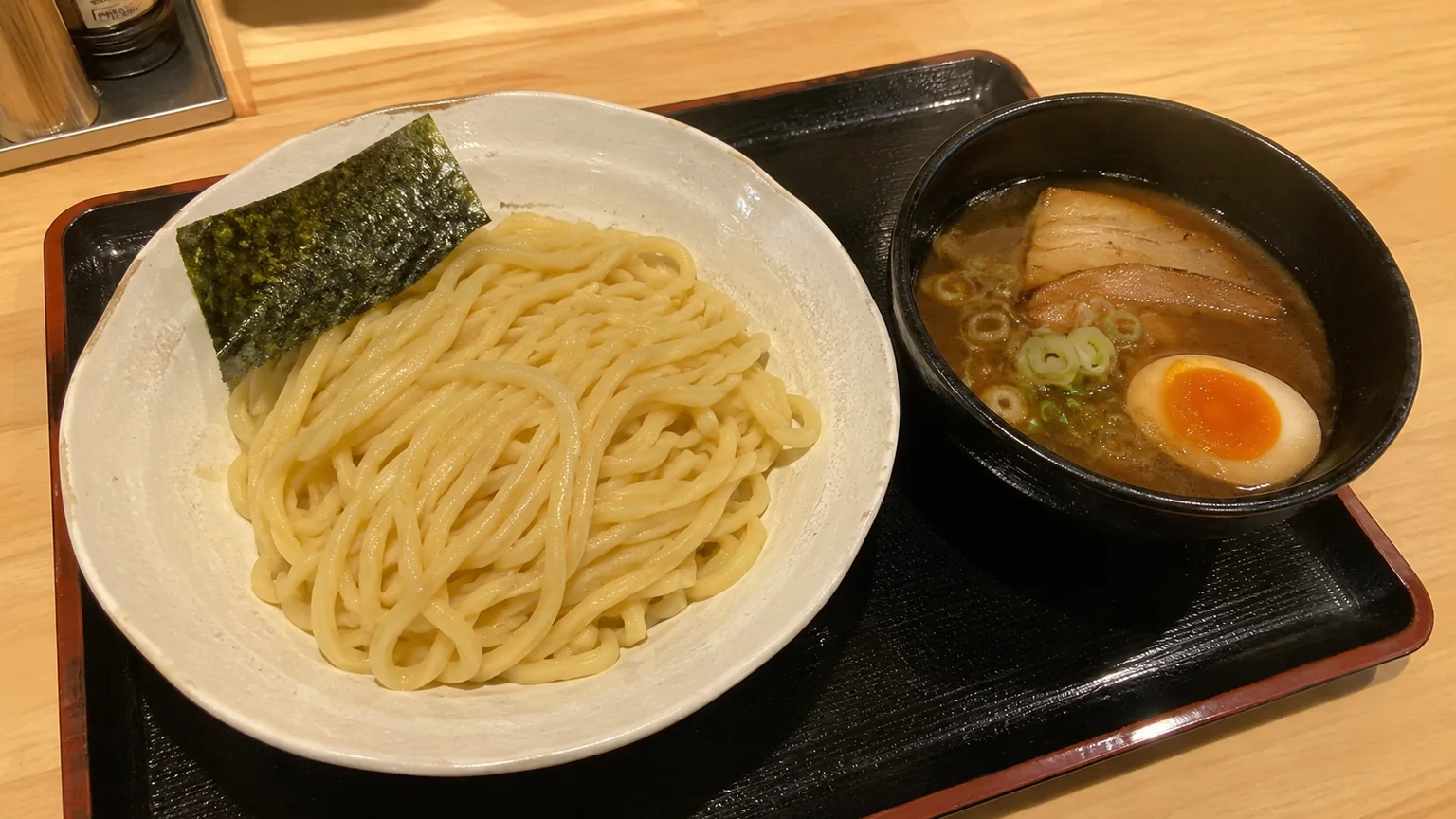
Tsukemen (Japanese Dipping Ramen)
Thick, chewy ramen noodles served cold or warm beside a small bowl of rich, concentrated pork and soy dipping broth, with a soft-boiled egg and sliced pork.
Ingredients
Pantry bits
- 2 eggs
- 200g pork belly or shoulder, thinly sliced
- 1 tsp sesame oil
- 2 cloves garlic, grated
- 2cm piece ginger, grated
- 500ml chicken stock
- 125ml dashi (Japanese soup stock)
- 4 tbsp soy sauce
- 2 tbsp mirin (Japanese sweet rice wine)
- 1 tbsp rice vinegar
- 1 tsp sugar
- 2 tbsp katsuobushi (Japanese bonito flakes), plus extra to serve
- 360g fresh thick ramen noodles (or 200g dried)
- 2 spring onions, finely sliced
- 1 sheet nori, cut into strips
- Lemon wedges, to serve
Instructions
- Lower the eggs into boiling water and cook for 6 1/2 minutes. Cool in iced water, then peel.
- Heat the sesame oil in a small saucepan over medium-high heat and fry the pork for 3-4 minutes until browned and cooked through. Add the garlic and ginger and stir for 30 seconds.
- Add the chicken stock, dashi, soy sauce, mirin, rice vinegar, sugar and katsuobushi. Simmer for 10 minutes until reduced by about a third. It should taste stronger and saltier than a normal ramen soup, because the noodles are only dipped in it. Halve the eggs and warm them in the broth for 1 minute.
- Cook the noodles in plenty of boiling water for 1 minute longer than the packet says, so they are fully cooked and chewy. Drain and rinse under cold running water until cool, then drain very well.
- Pile the noodles onto plates. Ladle the hot dipping broth with the pork into two small deep bowls and top with spring onion, the eggs and a pinch of katsuobushi. Serve the nori and lemon on the side.
- To eat, dip a few noodles at a time into the broth. When the noodles are gone, top up the leftover broth with a splash of hot water or stock and drink it like soup.
About this dish
Tsukemen (つけ麺) means "dipping noodles". Instead of sitting in soup, thick ramen noodles are served separately, rinsed cold so they stay springy, and dipped into a small bowl of hot, concentrated broth. It is a Tokyo ramen-shop favourite and a great way to eat ramen in warm Australian weather.
The broth here is a quick, punchy mix of stock, dashi, soy and mirin, deepened with katsuobushi. If you prefer your noodles in soup, try our shoyu ramen or tantanmen. For a lighter cold dipping noodle, there is zaru soba.
Tips for the best result
- Make the broth strong. The noodles only pick up a coating of it, so a normal-strength soup tastes bland.
- Use the thickest fresh ramen noodles you can find. Thin noodles go limp.
- Rinse the noodles well under cold water so they are bouncy and not starchy.
Substitutions
- Pork: chicken thigh or shiitake mushrooms.
- Dashi: use an extra 125ml chicken stock and a little more katsuobushi.
- Noodles: thick udon noodles work in a pinch.
Storage
The broth keeps in the fridge for 3 days or the freezer for 2 months. Cook the noodles fresh each time.
Tsukemen FAQs
Are tsukemen noodles served hot or cold?
Traditionally the noodles are cold and the broth is hot. Some shops offer warm noodles ("atsumori"); just rinse them in hot water instead of cold.
Why is tsukemen broth so salty?
Because you only dip the noodles, the broth needs to be concentrated. At the end, ask for "soup wari": hot stock added to the leftover broth so you can drink it.
Where can I buy thick ramen noodles in Australia?
Look in the fridge or freezer section of Japanese and Asian grocers for fresh ramen labelled "futomen" or "thick". Some larger supermarkets stock fresh ramen in the refrigerated Asian section.
More recipes to cook
All recipes


Never miss a recipe
Get practical Asian recipes and pantry guides in your inbox.