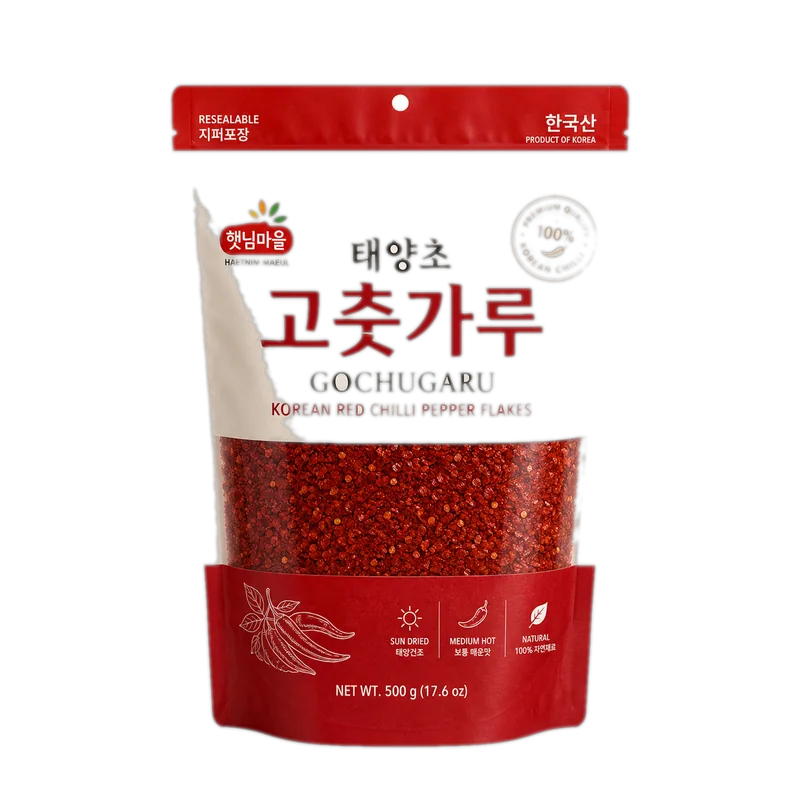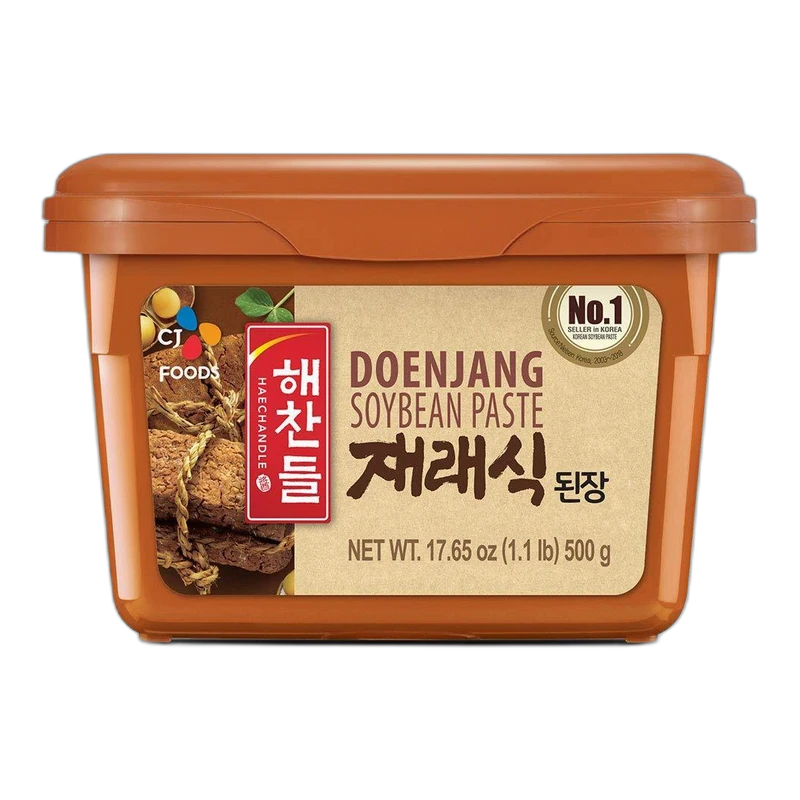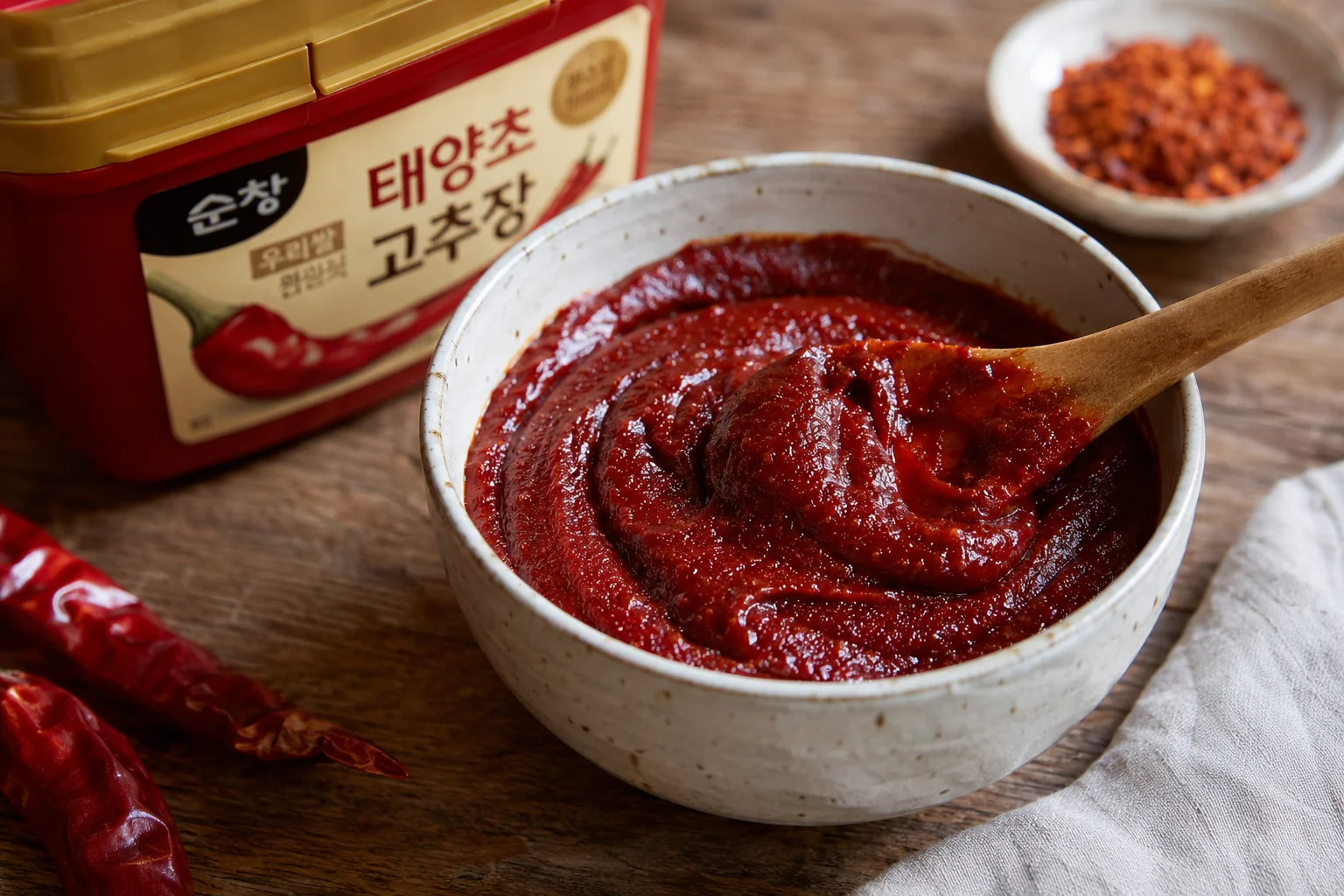
What is gochujang made of?
Gochujang is made principally from red chilli powder, glutinous rice, fermented soybean and salt. Fermentation gives it savoury depth, the rice contributes sweetness, and the chilli brings a slow warmth rather than a sharp, immediate heat.
Is gochujang the same as gochugaru?
No. Gochugaru is Korean red chilli in flake or powder form; gochujang is a fermented paste. Gochugaru adds chilli flavour and heat without the sweetness, salt or fermented body of gochujang. Many Korean dishes use both.
What can I use instead of gochujang?
There is no exact substitute, because the fermented sweetness is distinctive. At a push, combine miso with a chilli paste or chilli flakes and a touch of sugar. Sriracha alone is thinner, sharper and less fermented, so it changes the dish.
Does gochujang need to be refrigerated?
Once opened, refrigeration is the safest and most practical option. Keep the lid clean and tightly closed. The paste may darken slightly over time, but its concentrated, fermented character means a tub generally lasts well.
Gochujang in a nutshell
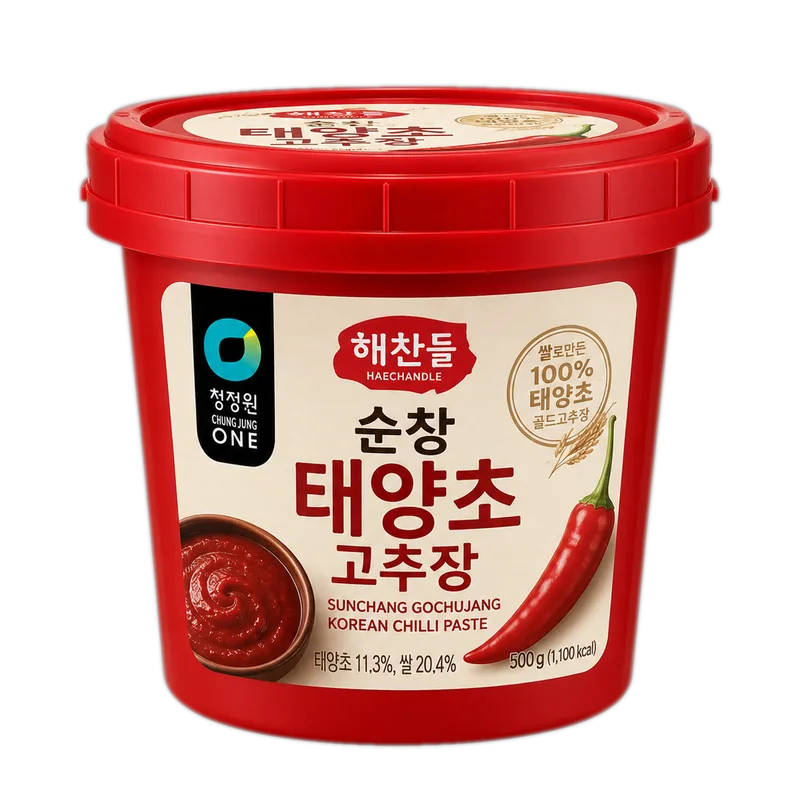
Gochujang is a thick Korean fermented condiment made principally from red chilli powder, glutinous rice, fermented soybean and salt. It is spicy, but heat is only part of the story. Fermentation gives it savoury depth, the rice contributes sweetness and the chilli brings a slow warmth rather than the sharp hit of many hot sauces.
What does gochujang taste like?
Think chilli paste crossed with miso, but sweeter and fruitier. Straight from the tub it can taste intense: salty, sticky, concentrated and funky. Once loosened with soy sauce, sesame oil, vinegar, stock or cooking liquid, it becomes rounded and glossy. That balance is why it works in marinades, stews, dipping sauces and glazes.
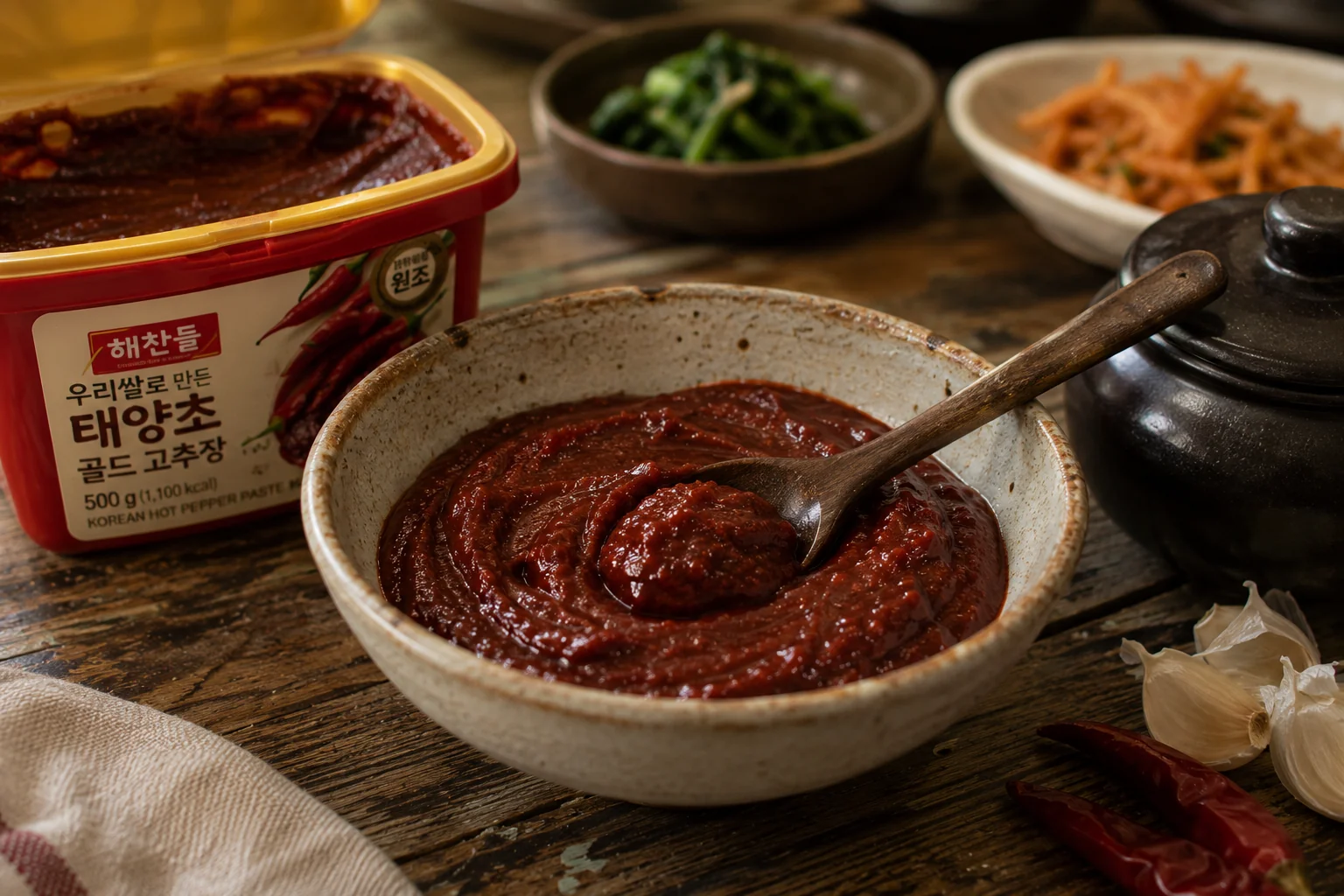
How is it different from gochugaru?
Gochugaru is Korean red chilli in flake or powder form; gochujang is a fermented paste. They are related but not interchangeable. Gochugaru adds chilli flavour and heat without the sweetness, salt or fermented body of gochujang. Many Korean dishes use both.
How to use gochujang
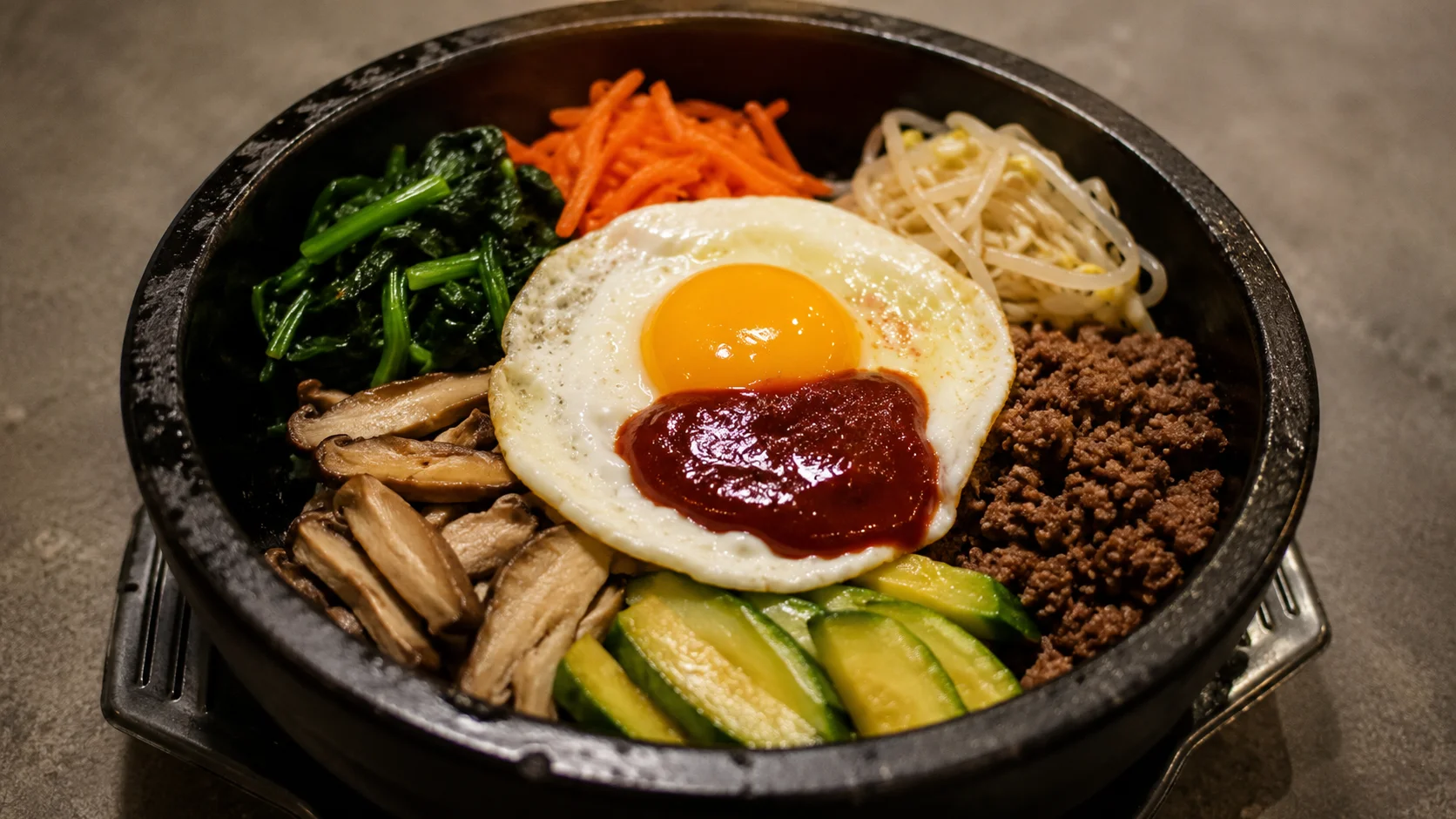
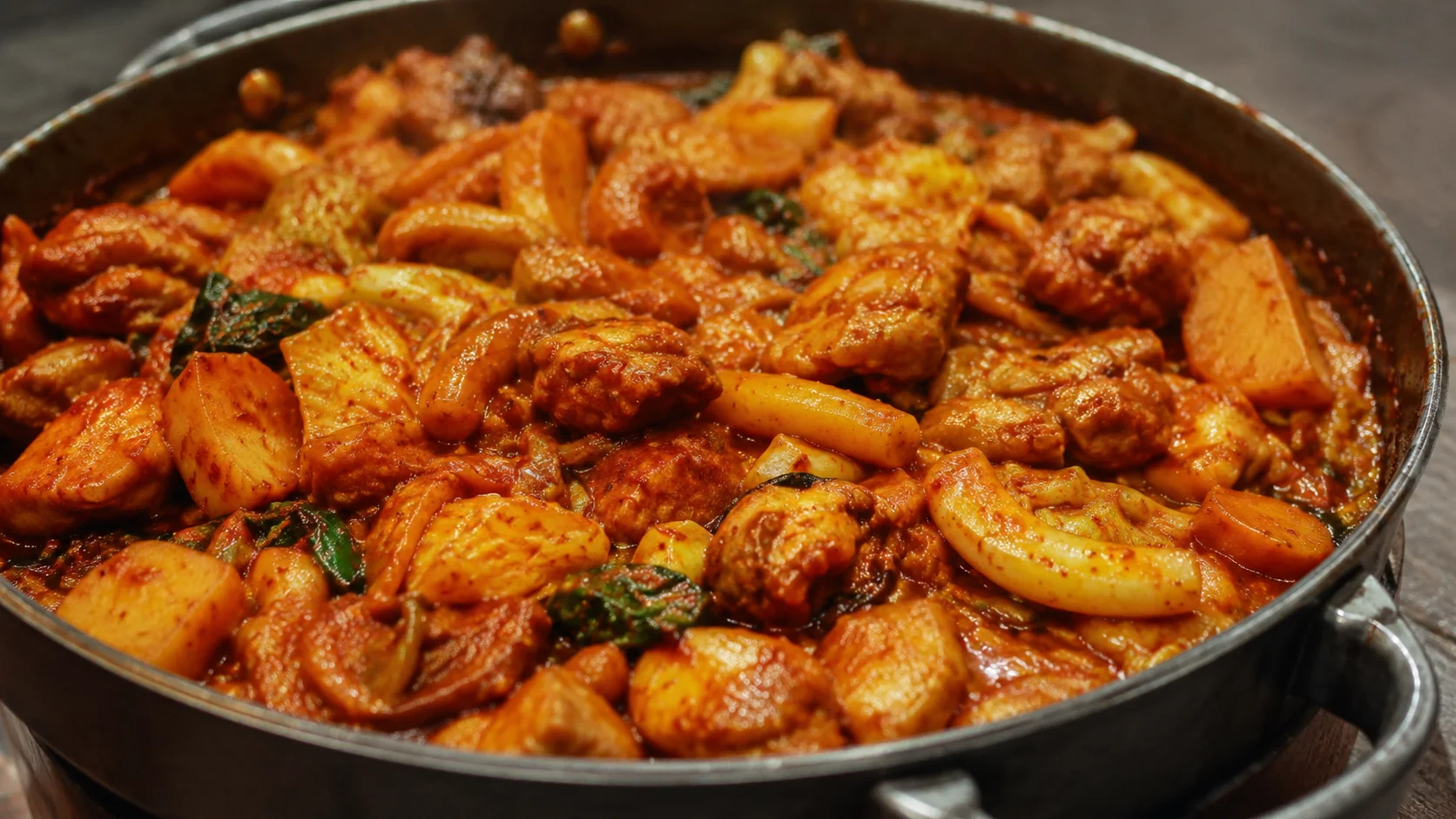
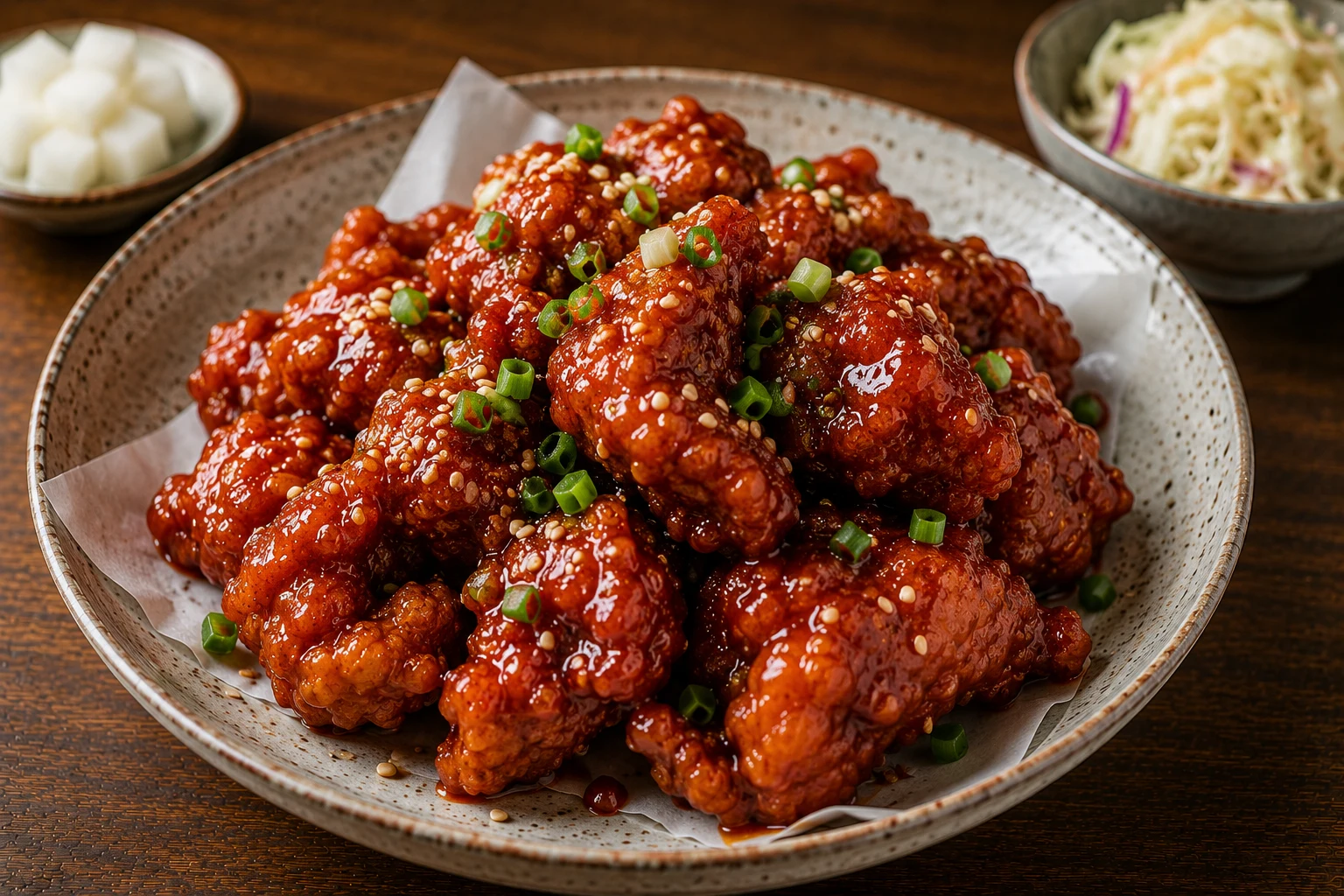
Start with a teaspoon or tablespoon rather than treating it like ketchup. Mix it into bibimbap sauce, stir it through fried rice, add it to jjigae, whisk it into a marinade for chicken or pork, or combine it with honey and vinegar for a sticky glaze. It is also excellent outside strictly Korean cooking: try a little in mayonnaise, burgers, roast vegetables or a cheese toastie.
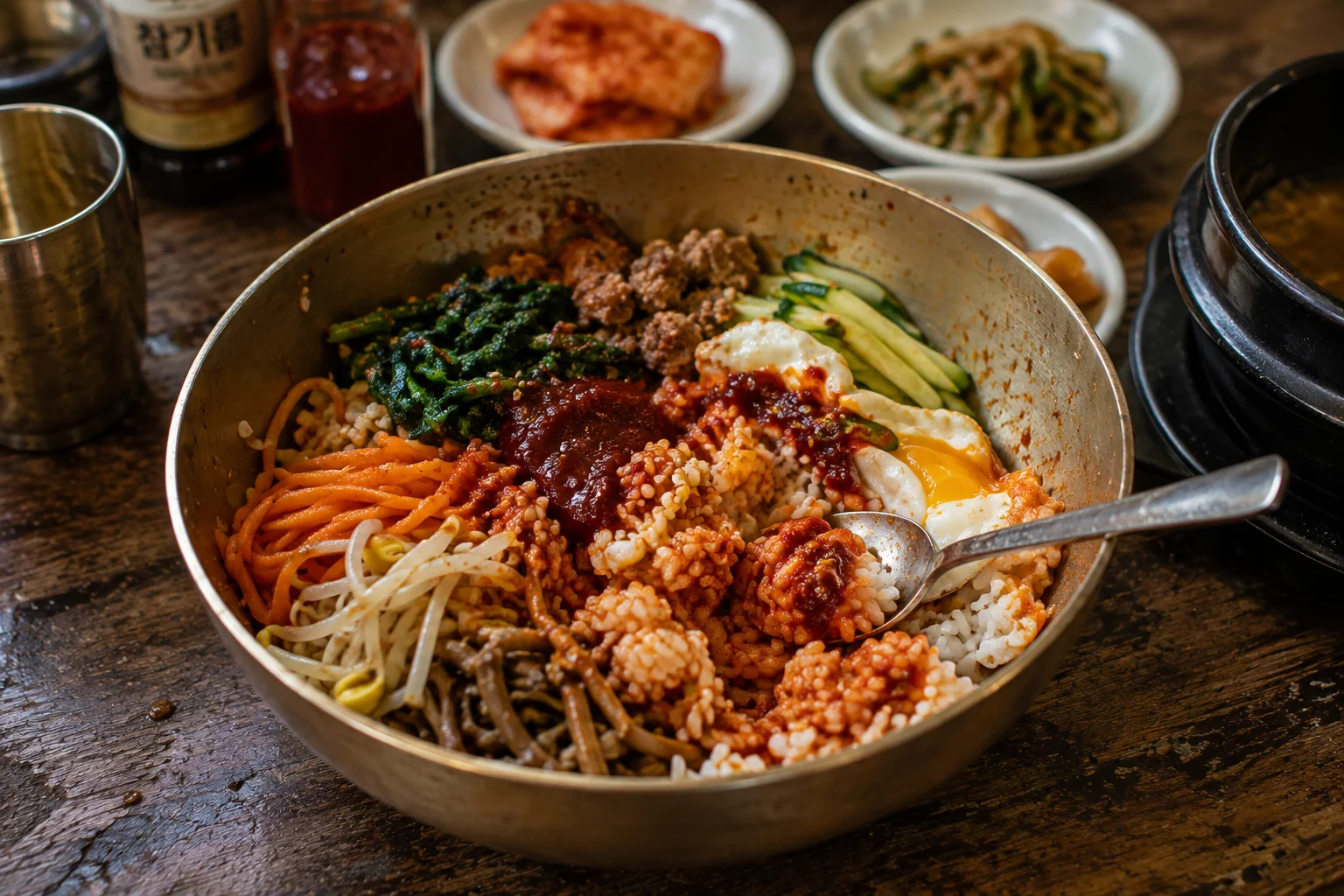
A simple gochujang sauce
For an all-purpose sauce, mix gochujang with soy sauce, rice vinegar, sesame oil and a little honey or sugar. Thin with water until spoonable. Taste before adding salt: both gochujang and soy sauce already bring plenty.
What can I substitute for gochujang?
There is no perfect substitute because the fermented sweetness is distinctive. In a pinch, combine miso with a chilli paste or chilli flakes and a touch of sugar. Sriracha alone is much thinner, sharper and less fermented, so it changes the character of the dish.
Does gochujang need to be refrigerated?
Once opened, refrigeration is the safest and most practical option. Keep the lid clean and tightly closed. The paste may darken slightly over time, but its concentrated, fermented character means a tub generally lasts well when handled properly.
The takeaway
If you cook Korean food with any regularity, gochujang is a pantry essential. It does not simply make food hot; it adds sweetness, fermentation, colour and savoury depth in one spoonful.