What type of wok should I buy?
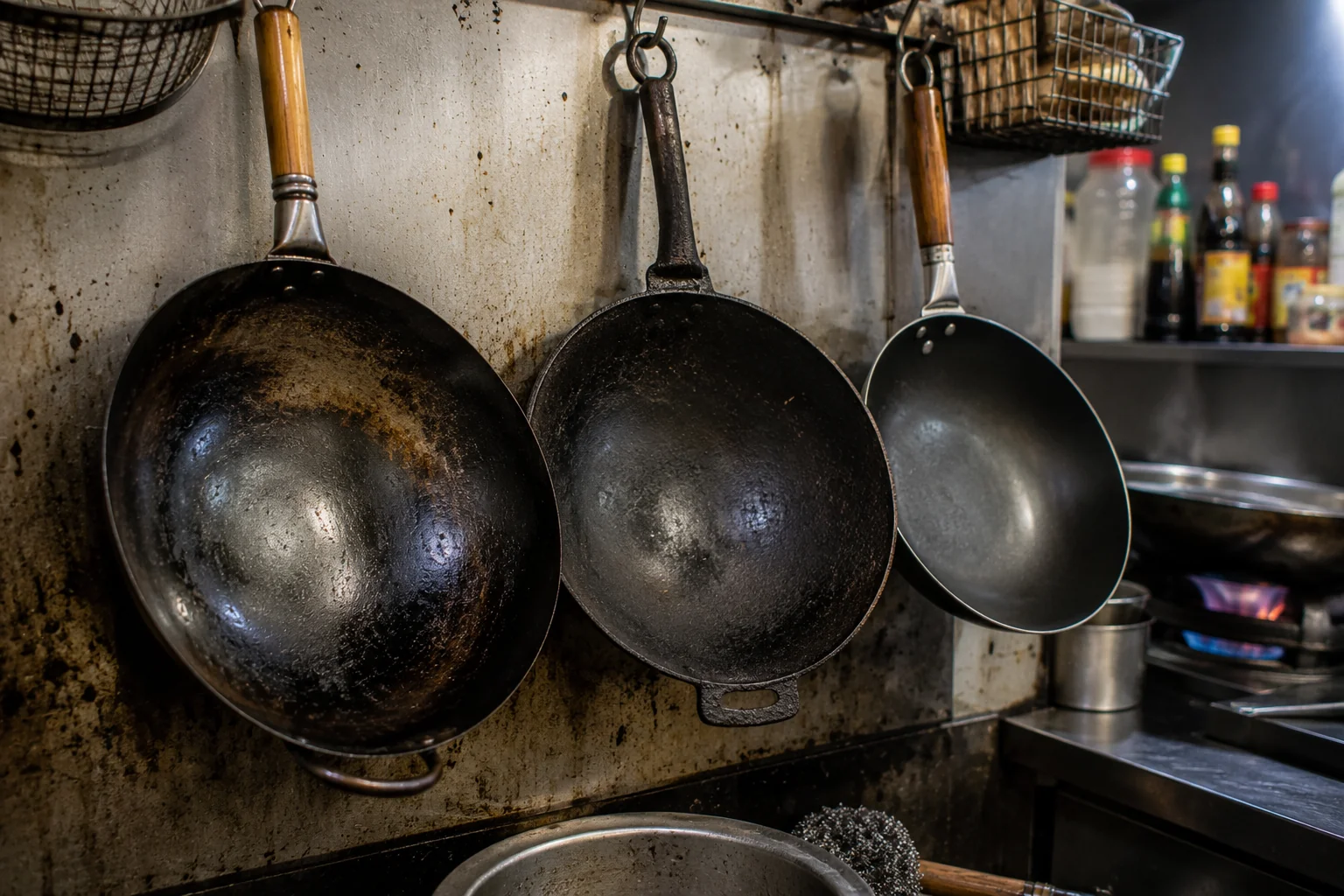
For most home cooks, a 30 to 35 cm carbon-steel wok with a flat bottom. Carbon steel heats quickly, responds rapidly when you change the flame, and develops a naturally slick seasoned surface with use.
Is carbon steel or cast iron better for a wok?
Carbon steel, for most people. Cast iron retains heat extremely well but is heavy and slower to respond, which makes tossing harder. Carbon steel is lighter and more responsive, better suited to the rapid temperature changes wok cooking relies on.
Should I buy a non-stick wok?
Generally no. Non-stick makes cleaning easy but limits very high-heat cooking, and the coating prevents the seasoned patina carbon steel develops. It is convenient for gentle cooking but less convincing for serious stir-frying.
What wok works on an induction hob?
Choose a flat-bottom carbon-steel wok specifically compatible with induction, so the base makes solid contact with the surface. Induction can heat the base fiercely, so preheat progressively rather than blasting an empty wok at maximum power.
The short answer
For most home cooks, a 30–35 cm carbon-steel wok with a flat bottom is the safest recommendation. Carbon steel heats quickly, responds rapidly when you change the flame and develops a naturally slick seasoned surface with use.
Why carbon steel wins
Traditional wok cooking relies on rapid changes in temperature. Carbon steel is relatively light and responsive, which makes tossing and moving food easier than with heavy cast iron. A good wok does not need to be expensive; simple restaurant-supply models can be excellent.
Flat bottom or round bottom?
Round-bottom woks are traditional and excellent over dedicated wok burners, but many domestic hobs cannot hold them securely. A flat-bottom wok sits directly on a standard gas, electric or induction surface and transfers heat more reliably in a home kitchen.
What about cast iron?
Cast iron retains heat extremely well but is heavy and slower to respond. Thin Chinese cast-iron woks are different from thick Western skillets, but they can still be more fragile and cumbersome than carbon steel. They are a valid choice, just not our default recommendation for beginners.
Should I buy a non-stick wok?
Non-stick makes cleanup easy but limits one of the wok's greatest strengths: very high-heat cooking. Many non-stick coatings are not intended for prolonged extreme temperatures, and the coating prevents the seasoned patina associated with carbon steel. A non-stick wok is convenient for gentle cooking but less convincing for serious stir-frying.
What size wok is best?
Around 30–35 cm is a useful home size. Too small and ingredients crowd and steam; enormous restaurant woks are awkward on domestic burners. Remember that a wok works best when food has room to contact hot metal.
What wok works on induction?
Choose a flat-bottom carbon-steel wok specifically compatible with induction. The flat base needs solid contact with the cooking surface. Induction can heat the base fiercely, so preheat progressively rather than blasting an empty wok at maximum power for a long period.
Do I need a wok lid and special tools?
A lid is genuinely useful for steaming and braising. A wok spatula or metal chuan makes tossing and scraping easier, although a sturdy wooden or silicone utensil can work. Spend your money on a decent wok before accumulating accessories.
The takeaway
Buy simple carbon steel, choose a flat base unless you have a proper wok burner, and do not obsess over premium branding. The wok gets better through cooking, seasoning and familiarity.